
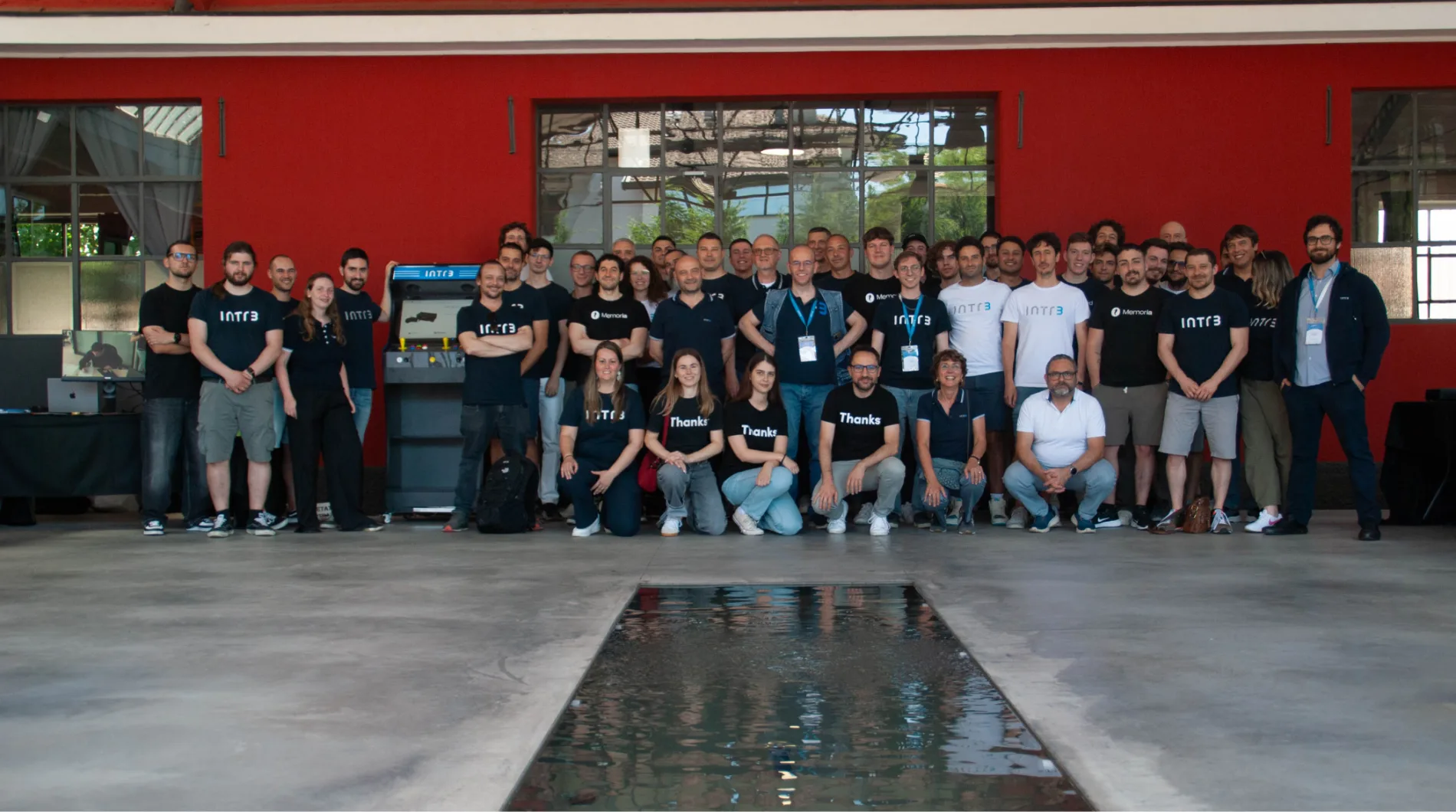
The second Intré Camp of 2026 took place on Thursday, June 11, in a new location for our event: the S-Loft event space in Lissone (MB). For this day, spent without external guests, we experimented with a new format dedicated to our Guilds: the Gildonfiera.
Curious to find out more?
In the article, you will find, among other things, a section dedicated to the Gildonfiera and a summary of the Unconference.
Enjoy the read!
Opening the Day
Francesco Rigillo, CEO of Intré and Betrusted, presented a summary report on 2026 and several internal initiatives.
AI at Intré
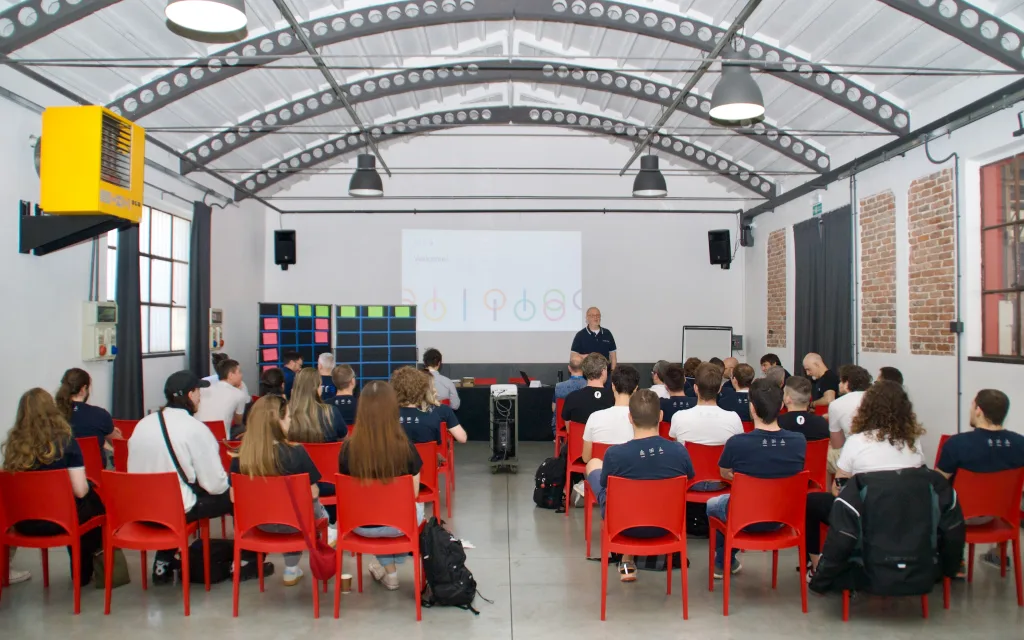
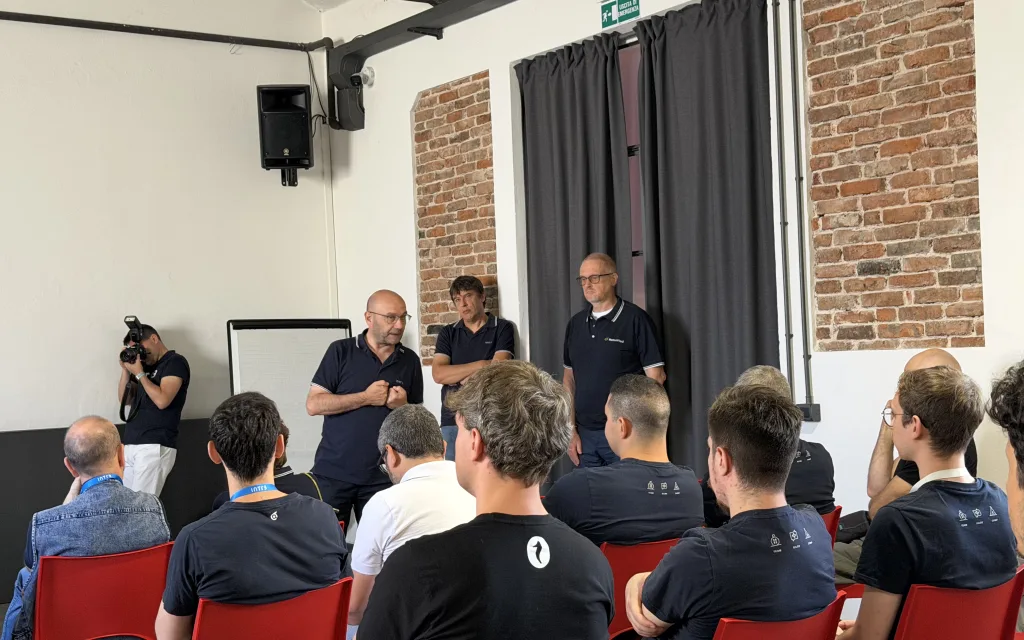
After Francesco’s speech, Alex Mufatti, CTO and partner at Intré, gave a presentation dedicated to the latest revolution we are experiencing: Artificial Intelligence, more commonly known as AI.
Alex touched on several key points, reminding us that AI is no longer just a tool to experiment with: it is entering everyday processes and can increase speed, quality and productive capacity. To generate real value, however, using it is not enough: broad skills, shared workflows, attention to security and metrics that assess overall impact are needed. The goal is not simply to be “AI-first”, but to build an AI-sustainable organization, where efficiency translates into better outcomes for companies and people.
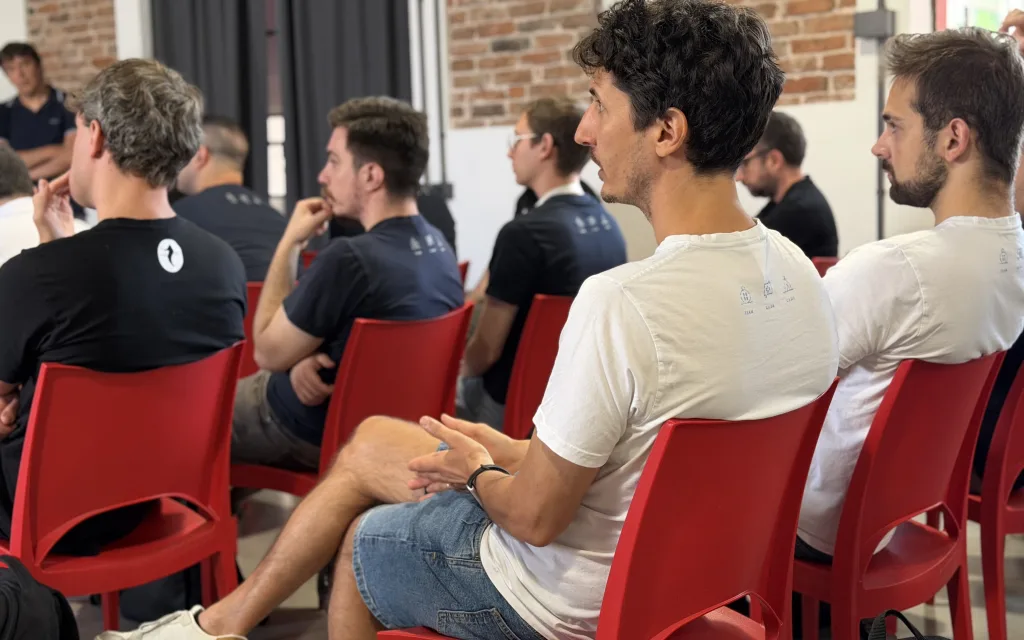
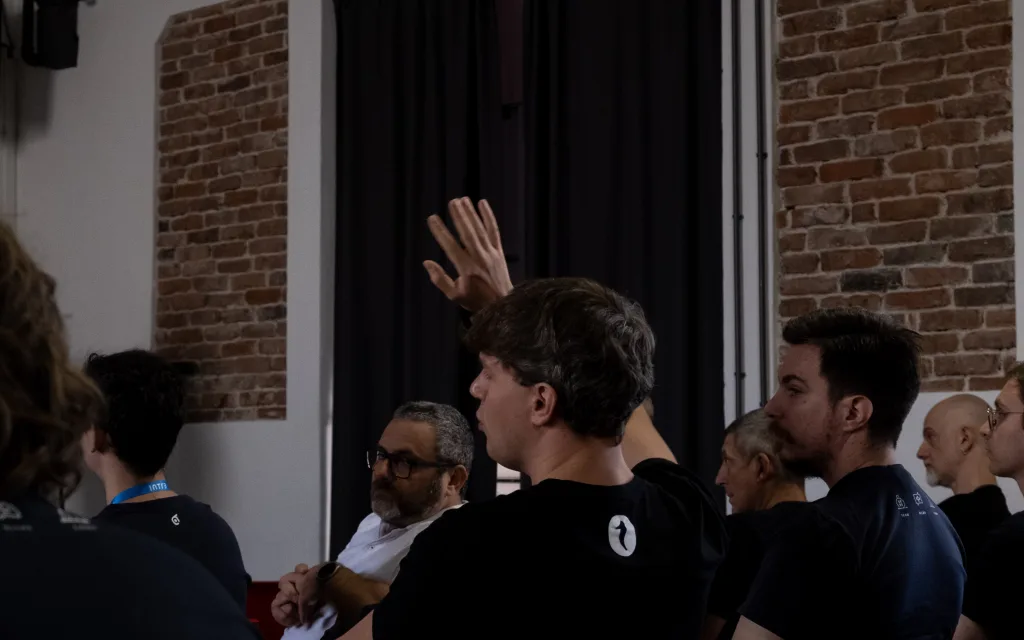
Alex’s presentation sparked an interesting debate that involved everyone in the room, including Intré’s board, composed of Francesco Rigillo, Alex and Fabio Ghislandi.
Gildonfiera: our first time
The Gildonfiera was created as an experiment to make the moment of sharing the Guilds more dynamic, participatory and closer to people’s interests than our traditional Gildonferenza format (if you want to learn more, here is how the Gildonferenza from the previous Intré Camp on February 6, 2026 went).
How does a Gildonfiera work?
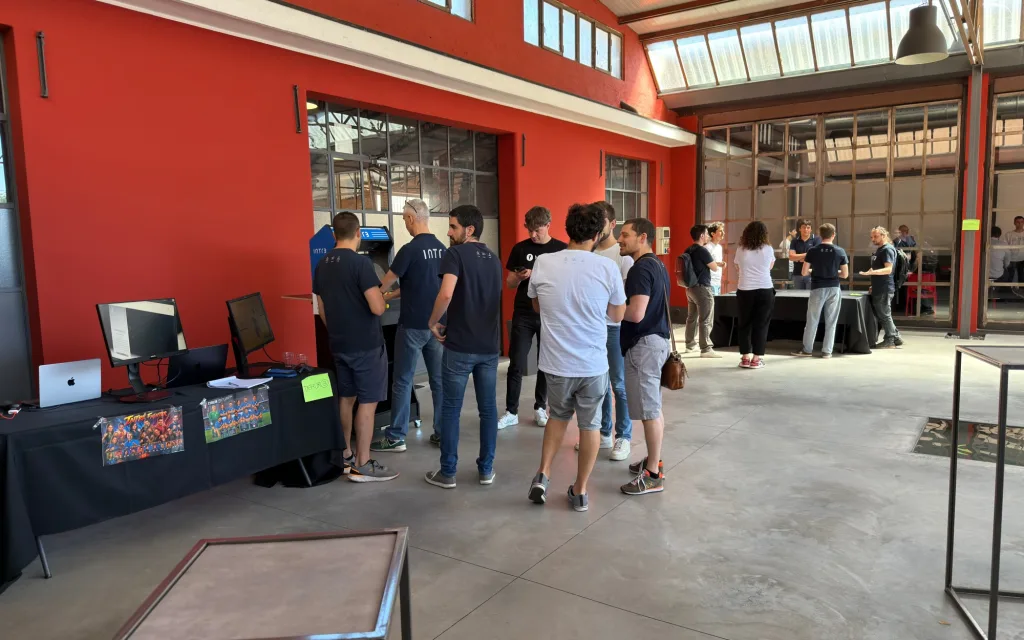
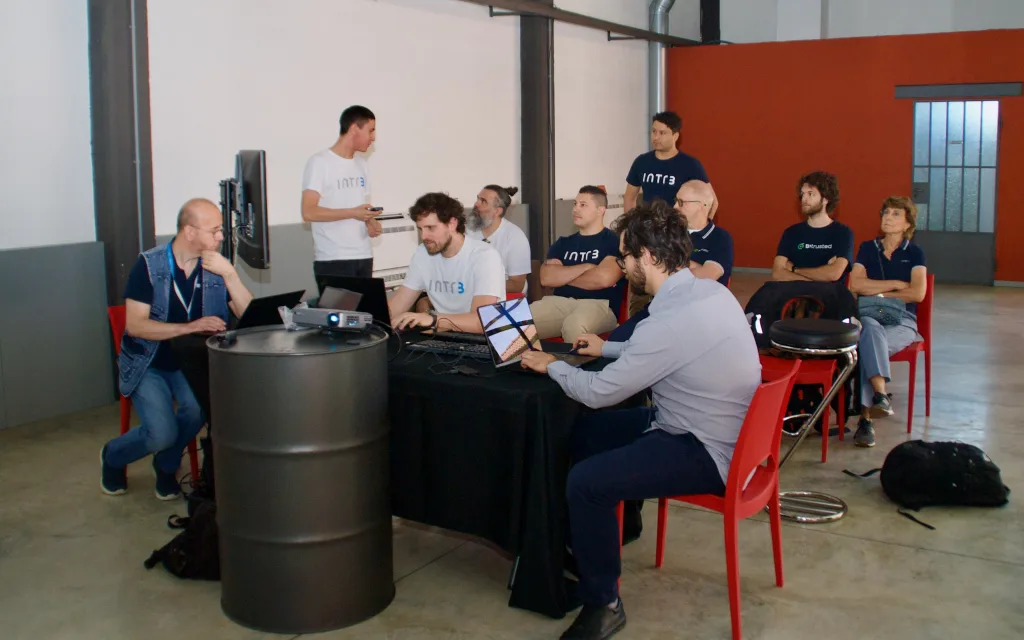
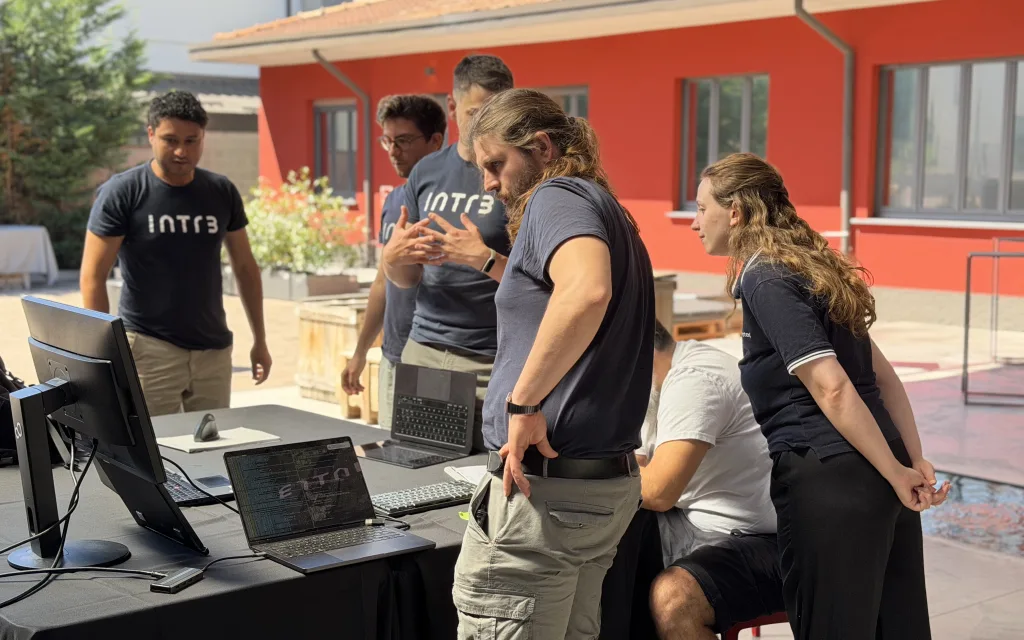
The idea is to transform the traditional Gildonferenza into a sort of bazaar, or marketplace. For the entire time dedicated to the initiative, each Guild has its own space to present its outcome through demos, deep dives and Q&A moments. People can move freely between the different spaces, choosing which content to follow based on their interests.
The presentations are repeated across several time slots, allowing different audiences to take part and Guild members to alternate in presenting the work carried out. There is no requirement to use slides: the focus of the initiative is direct discussion, the sharing of outcomes and the opportunity for each participant to build a more useful and personal path through the content.
In the next paragraphs, you will find a brief recap of each of the Guilds featured in the first Gildonfiera.
Insert coin
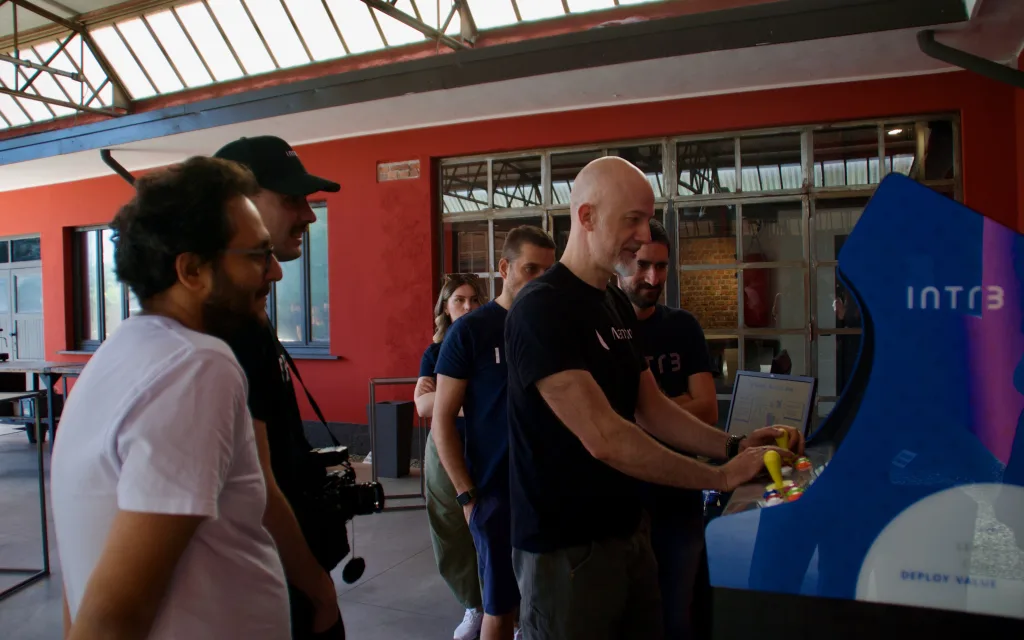
This Guild designed and built a custom arcade cabinet (further customizable with an Intré-branded marquee and side panels), intended to bring life to the office and become an engaging attraction at conferences with sponsor booths and company events.
The project involved assembly, wiring, hardware and software customization, and the creation of a Batocera theme aligned with the company’s visual identity, developed with the support of Artificial Intelligence. Every stage of the work was documented, resulting in reusable CAD files that make it possible to replicate or further evolve the cabinet over time.
Gymbro vision
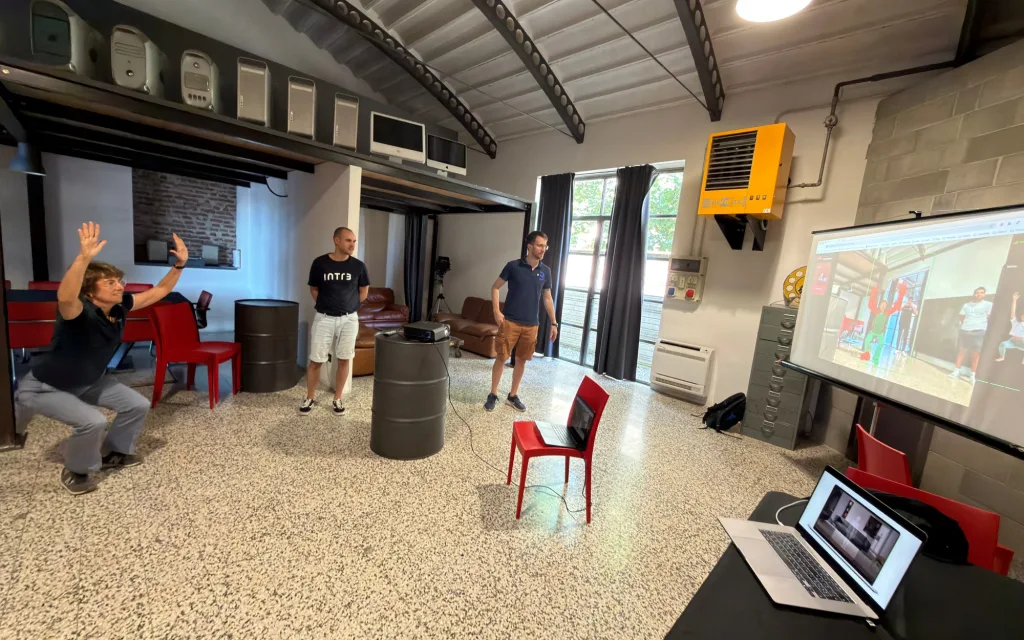
This Guild explored the design of an application capable of verifying the correct execution of exercises in real time and providing corrective feedback through AI. The project combined research with a personal trainer, competitor analysis and UX/UI design, while also experimenting with voice interaction and augmented reality. On the technical side, the team designed a cloud-based pay-per-use architecture and evaluated MediaPipe for body movement recognition, with the goal of making the experience effective, accessible and sustainable.
During the Gildonfiera, attendees (myself included) had the opportunity to test their own mobility by performing overhead squats while being monitored by the application.
The lord of the agents – Group 1
This Guild explored tools and approaches for agentic coding, with a particular focus on skill management, context handling and token consumption.
Each meeting started with “JournalAI”, a discussion session created specifically for this study group to review the latest developments gathered during the week, before moving on to hands-on experimentation with tools, LLMs and agent orchestration techniques.
The journey enabled participants to make more informed decisions when choosing the most suitable solutions, from managing existing codebases and small internal automations to coordinating multiple agents working on the same project.
The lord of the agents – Group 2
The second group of “The Lord of the Agents” explored a gradual approach to using AI agents in software development.
The journey starts with clearly defining the project context, continues through planning, implementation and review, and culminates in the creation of shared skills and workflows that integrate testing, external tools and automated checks. The goal is not to delegate without supervision, but to use AI agents consciously to make repetitive tasks more efficient while maintaining control over code quality and key architectural decisions.
Spec first, code later
Participants in this study group explored Specification-Driven Development, an approach that places the definition of specifications before code implementation.
After studying the documentation and tools such as Spec Kit, OpenSpec, BMad and SPPD, the group experimented with different workflows across three separate projects. This journey allowed participants to consolidate their understanding of the SDD paradigm and gain practical experience with its tools, workflows and potential.
The PVE squad!
This Guild explored Proxmox Virtual Environment (PVE) with the goal of preparing for a possible migration from the company’s current VMware vSphere ecosystem. After completing two online courses, the team put their knowledge into practice by simulating a production-like environment on an old server, covering everything from Proxmox installation and management to virtual machine migration and backup configuration. The experience provided practical validation of Proxmox as a potential alternative to vSphere, despite the absence of a real production infrastructure.
For the Gildonfiera, members of this Guild organized a live demonstration to showcase the power of PVE: migrating a running virtual machine from one host to another while a user was actively playing the popular game Minecraft.
Knock knock… Who’s there?
The only Guild not present at the Gildonfiera, due to the nature of its outcome.
This Guild focused on the main topics related to Identity Management and modern security protocols, analyzing the evolution of authentication and authorization systems while comparing some of the most widely used Identity Providers, including Keycloak, WSO2, Shibboleth and Apereo CAS. A central part of the project involved building a Docker Compose-based digital playground to experiment with the integration of Gateways, Identity Providers, Web Applications and APIs using OAuth 2.0, OpenID Connect and SAML 2.0. The study also covered fine-grained authorization, RBAC, PBAC and capability-based design.
Unconference
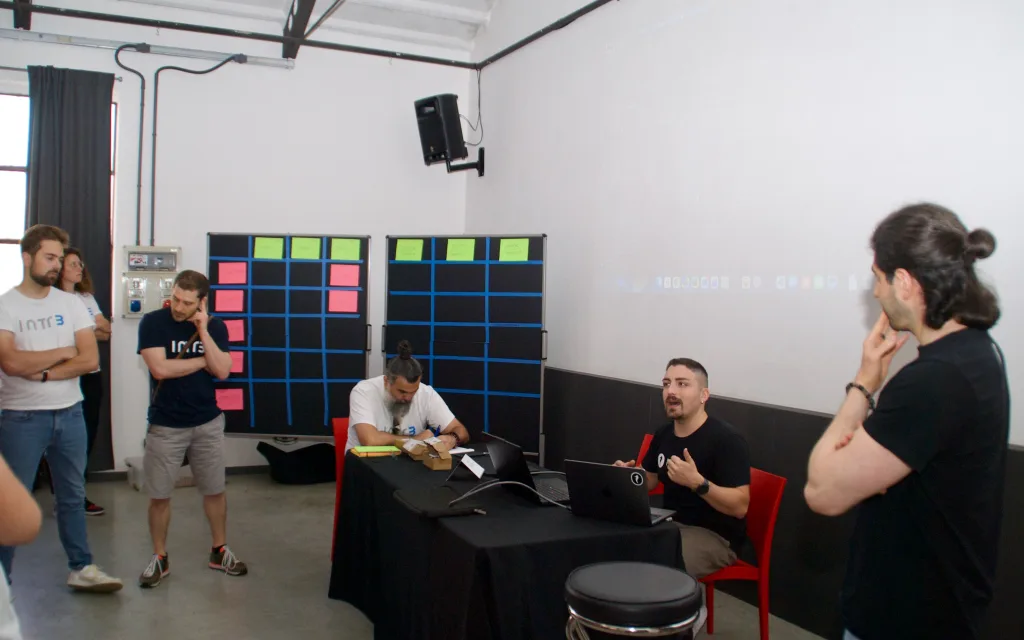
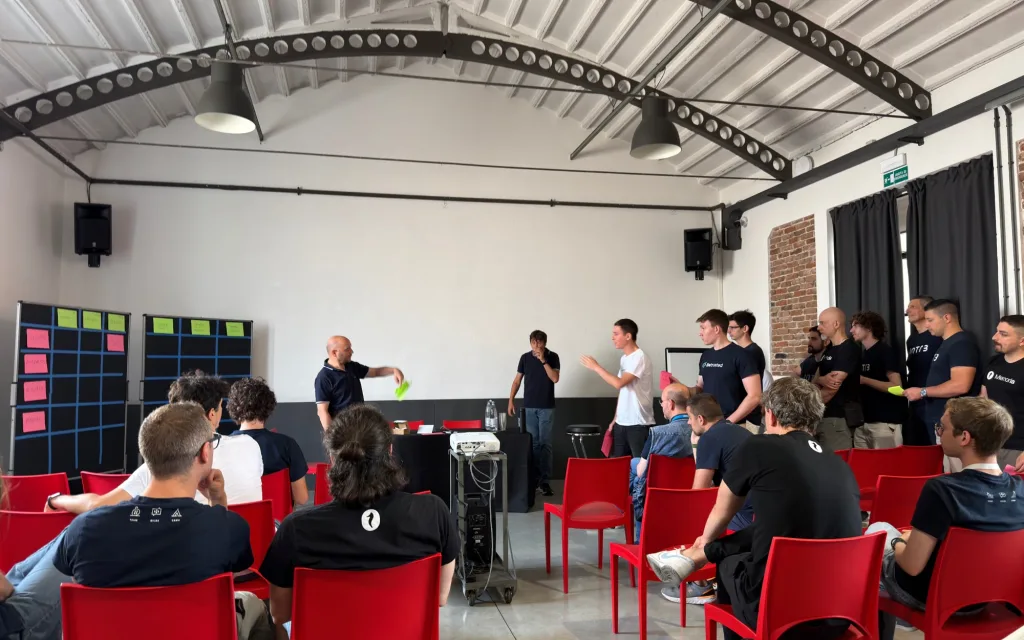
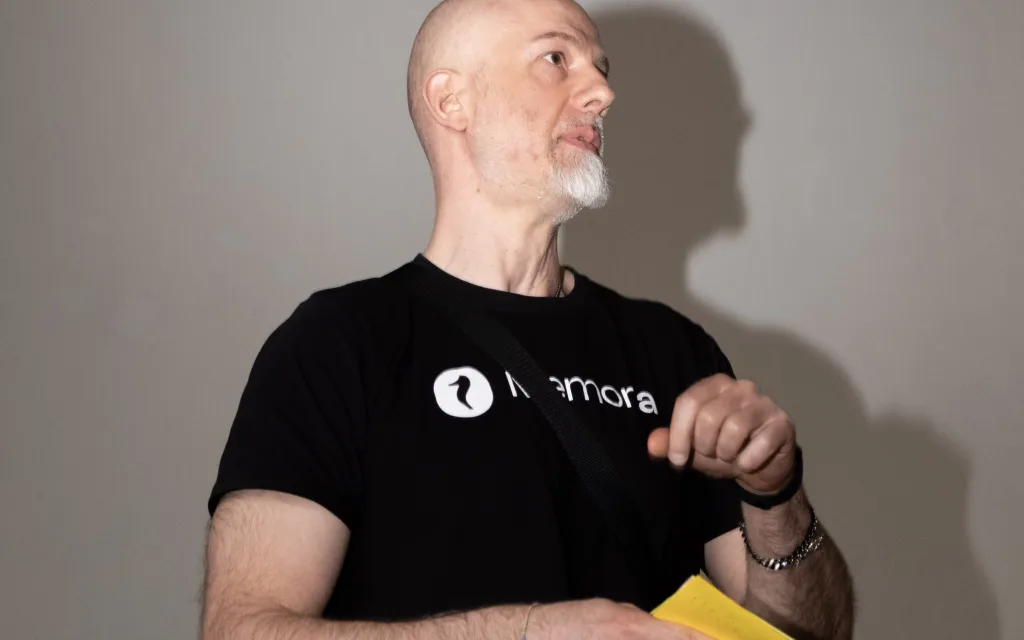
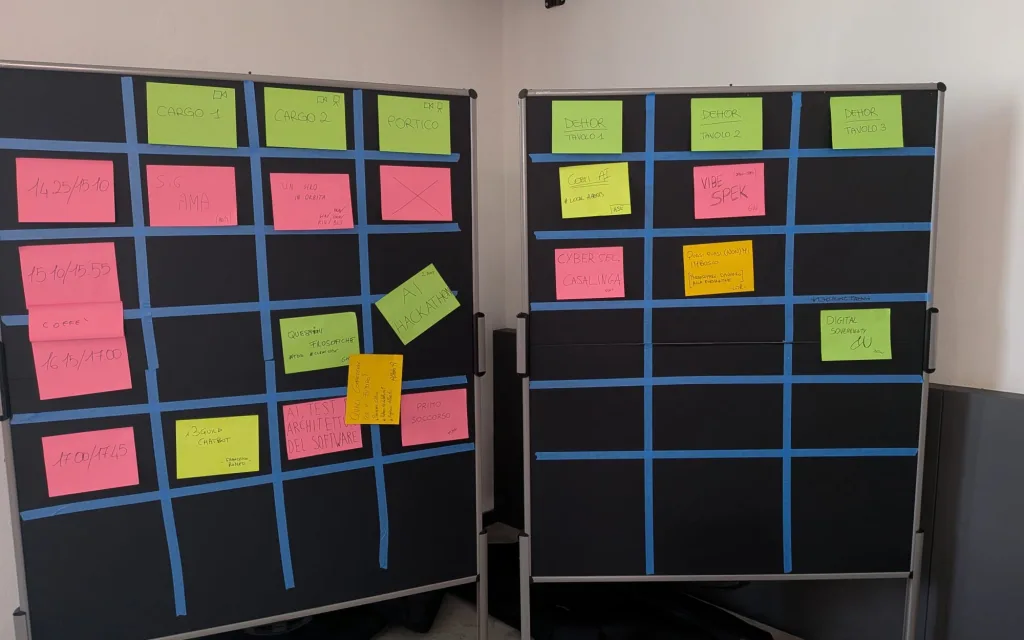
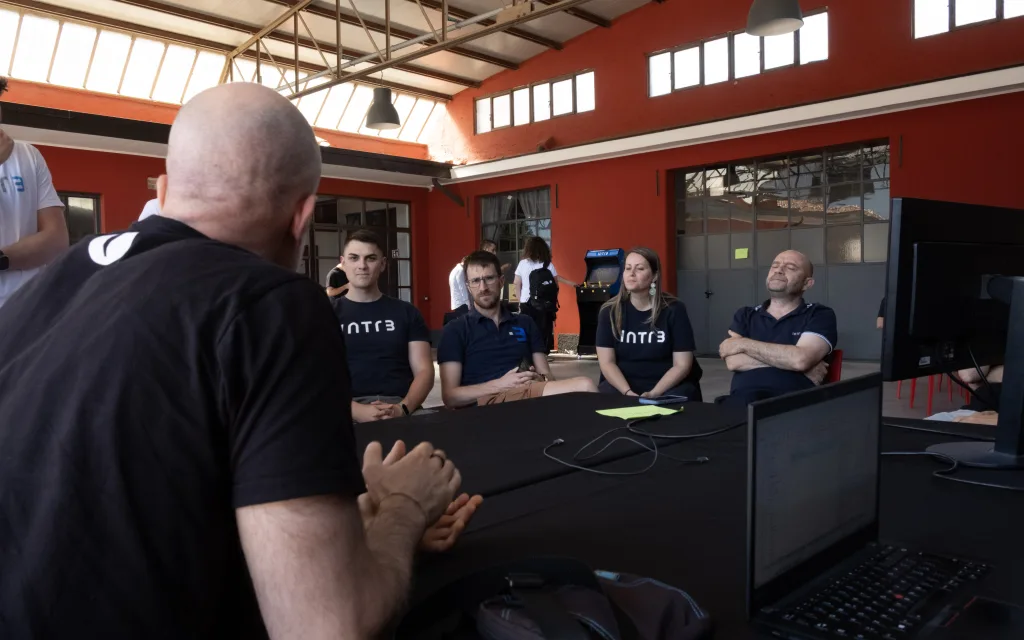
Once the Gildonfiera had come to an end, Fabio Ghislandi, Agile Coach and partner at Intré, kicked off the Unconference by explaining how it works and presenting the available rooms and time slots for the sessions.
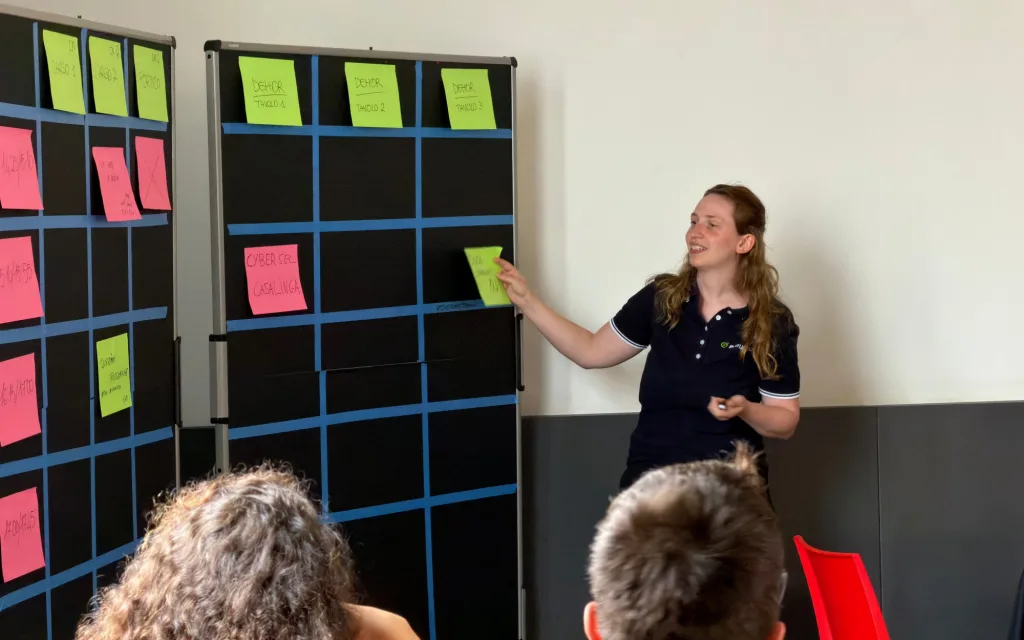
The agenda started with the marketplace: each participant had the opportunity to propose a topic, briefly present it to the group and place their Post-it on the schedule, choosing the most suitable time slot. Once all proposals had been presented, the group reviewed the agenda together to confirm or reorganize it. The rule was simple: any change could only be agreed upon by the person proposing it together with the person who had originally proposed the session being affected.
What did we talk about during the Unconference?
As always, the Unconference at this Intré Camp on June 11, 2026, featured a wide variety of engaging sessions.
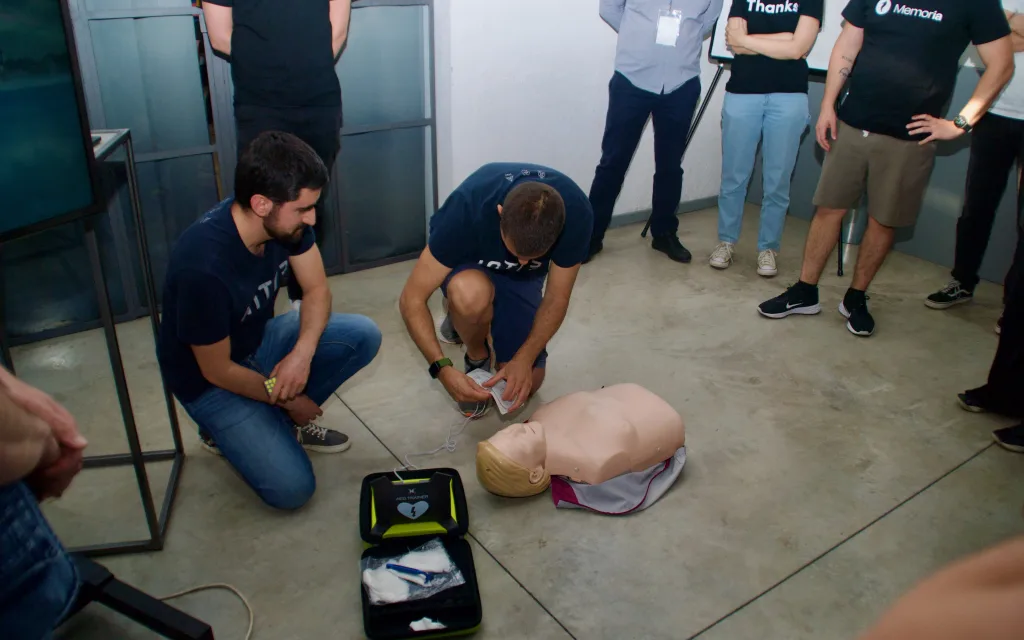
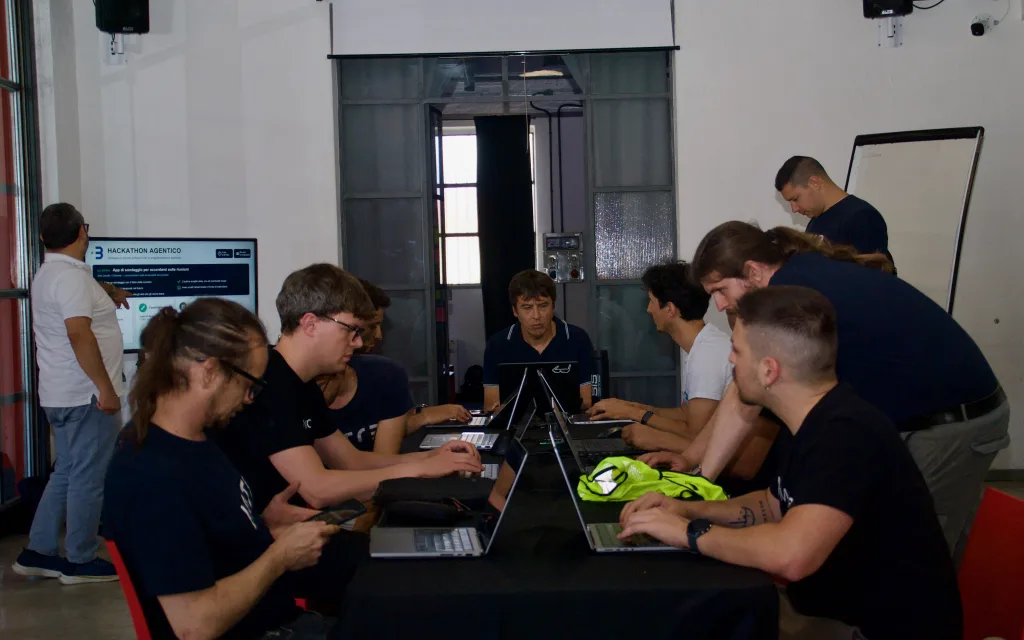
Most of the topics revolved around Artificial Intelligence: a mini hackathon on AI-assisted development practices, a discussion on the costs of using AI agents, another on OpenSpec and vibe coding. There were also discussions on how AI is reshaping software development, cybersecurity, and even sessions completely outside Intré’s usual technical topics, such as the first aid workshop led by Alberto Maggioni, who, complete with a CPR mannequin, demonstrated cardiopulmonary resuscitation techniques to attendees.
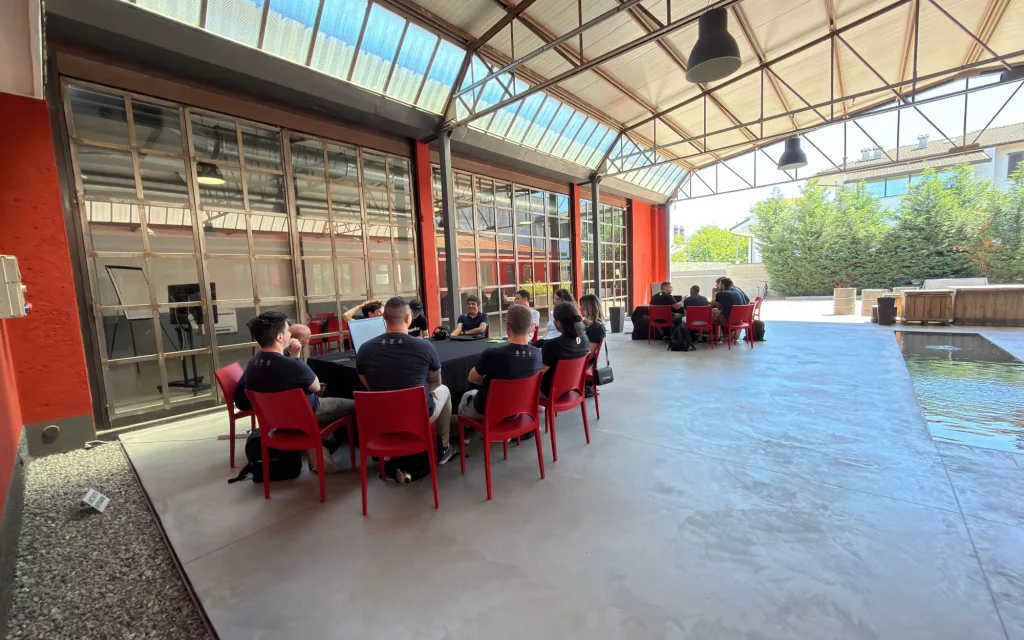
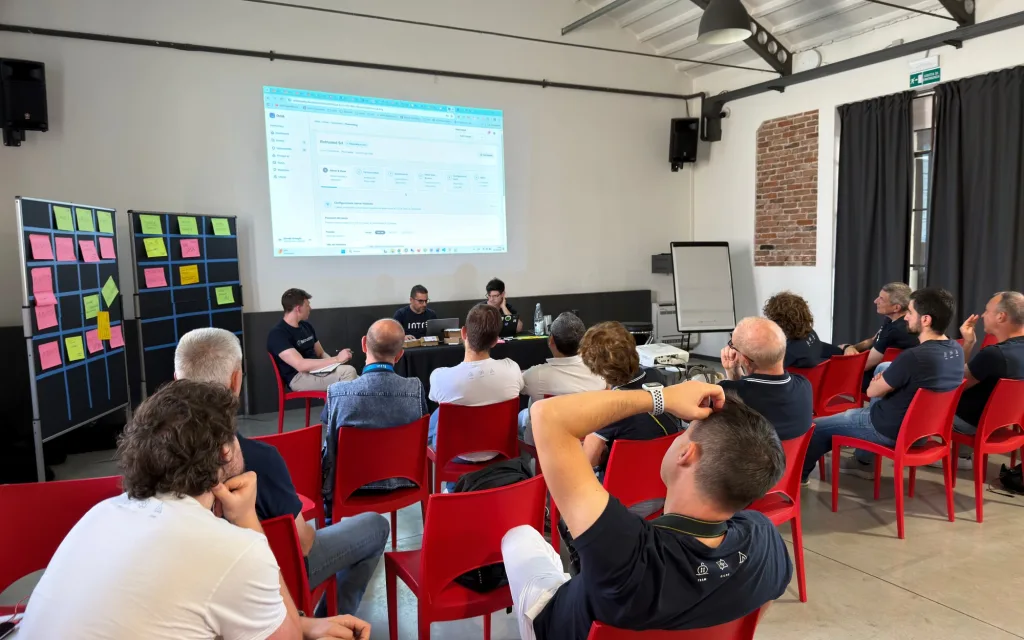
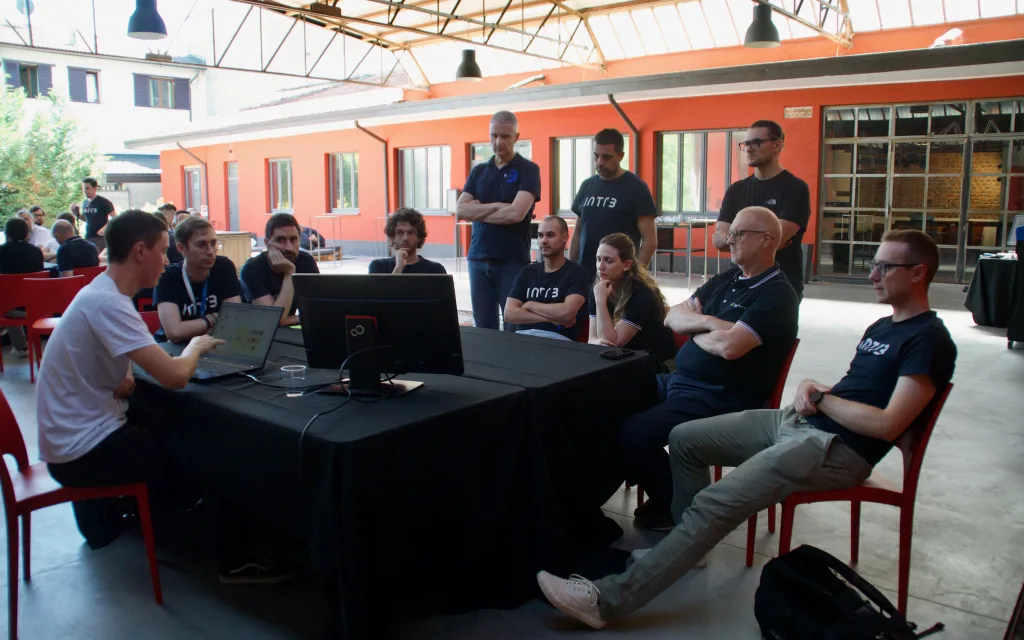
Below is a brief recap of four of the sessions.
A trip into Oobit
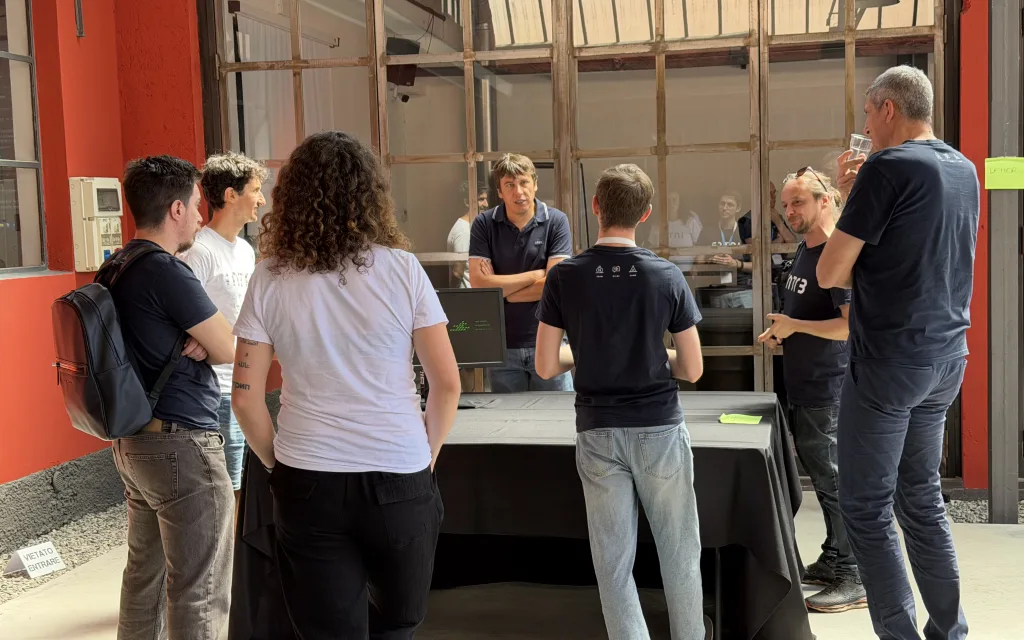
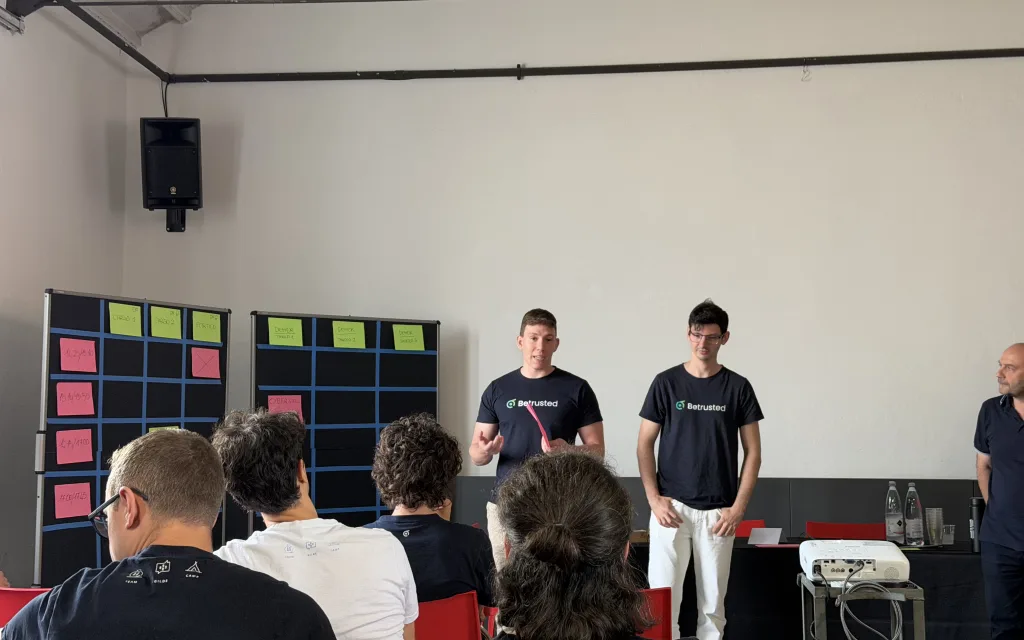
During their session, Gabriele Riva, Account Manager at Betrusted, and Davide Ornaghi, co-founder of the company, presented two solutions currently under development in collaboration with Intré. The first is designed to make infrastructure penetration testing a continuous activity, while the second focuses on automatically identifying vulnerabilities directly within the software delivery pipeline.
Philosophical questions about TDD and clean code in the age of AI
Fabio Ghislandi moderated this session, which explored the changes AI is bringing to the daily work of software developers.
For many people, this transition creates uncertainty and can feel like the loss of part of their professional identity: long-established activities, skills and habits suddenly seem open to question.
This led to several thought-provoking questions: does Test-Driven Development (TDD) still make sense? Does Clean Code (here is the link to Robert C. Martin’s well-known book) remain just as important? And which skills will truly matter in the years ahead?
The shared conclusion was not to abandon established practices and methodologies, but to rethink them as tools rather than goals. Writing clean, maintainable code, for example, remains valuable even when AI agents are involved: well-structured code makes it easier for language models to retrieve information, understand context and generate coherent results.
At the same time, an increasing share of developers’ work may shift toward analysis, information gathering and precise problem definition. The quality of the instructions given to an AI agent depends directly on the quality of the context that has been built. Delegating technical tasks can improve efficiency, but it also requires the ability to validate the results and avoid gradually losing essential skills.
The discussion also touched on the career path of junior developers. Whereas growth in the past often came from pairing with experienced developers to learn coding practices, future growth may increasingly depend on the ability to understand needs, communicate effectively, gather information and translate it into high-quality instructions for AI tools.
Digital sovereignty & U
Valentina Sona, Offensive Security Specialist at Betrusted, led a discussion on technological independence, a topic that has repeatedly emerged during recent Unconference sessions.
What came out of the discussion? There is no single model of digital sovereignty that works for everyone. The conversation explored both the technologies themselves and the internal and external motivations that lead individuals and organizations to reduce their dependence on products from large technology companies.
A chatbot for our internal Guilds management tool
Francesco Romeo, as part of his Master’s thesis in Computer Science at the University of Milano-Bicocca, presented the development of a local RAG chatbot integrated into our internal Guilds management system. The goal of the chatbot is to make the knowledge generated by the Guilds searchable in a reliable and controlled way.
The solution combines language models running on internal infrastructure, hybrid information retrieval and diagnostic tools that make it possible to verify which documents contributed to each answer.
The project highlights how the quality of an AI system depends not only on the language model itself, but also on the quality of the retrieved context, the traceability of its decisions and its ability to evolve over time.
Conclusion
The final session of the Unconference brought the day’s program to a close, leaving room for a shared discussion.
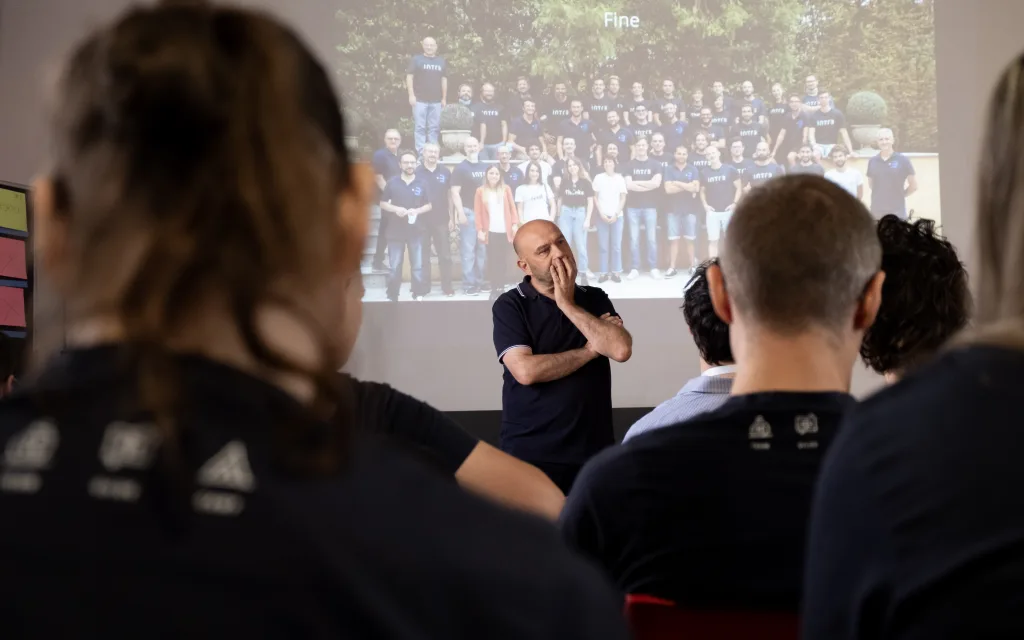
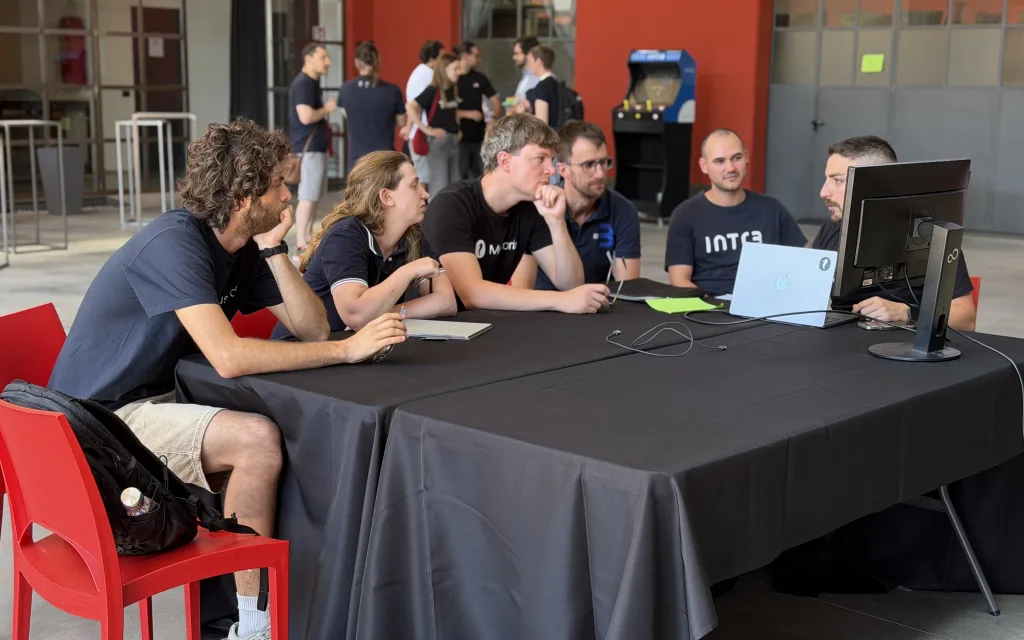
Before saying goodbye, we gathered in the main room to collect feedback on this Intré Camp on June 11 and, in particular, on the first Gildonfiera experiment. It was a useful opportunity to reflect on what had emerged and identify new ideas for future events.
The next Intré Camp is scheduled between the end of September and the first week of October, for the final gathering of 2026.
See you next time!