
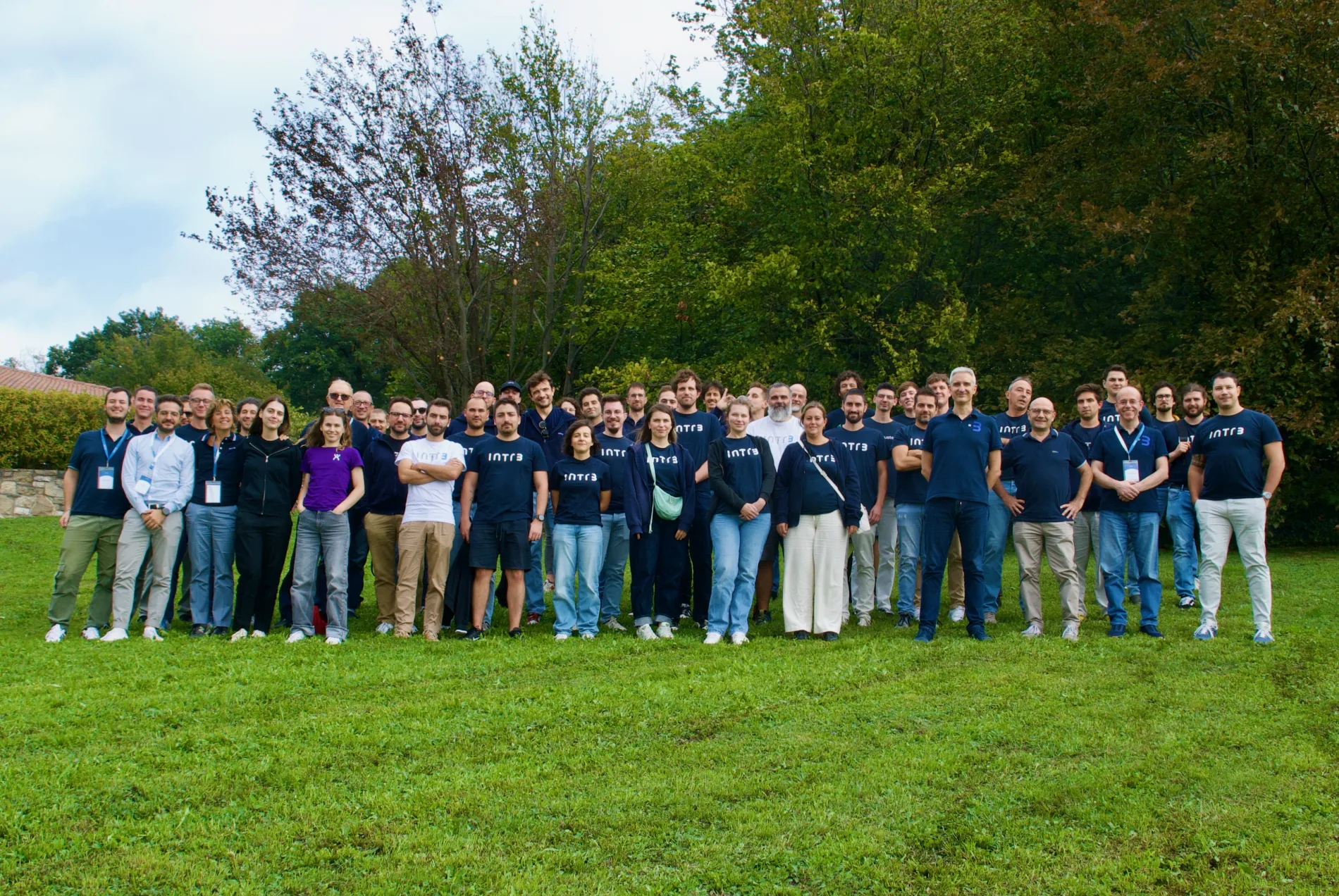
Intré Camp 25 September 2026 – La Collina dei Sogni
Welcome back to our recap of the third and final Intré Camp of 2026, held on Friday 25 September at a venue that was new to us: “La Collina dei Sogni” in Albano Sant’Alessandro (Bergamo).
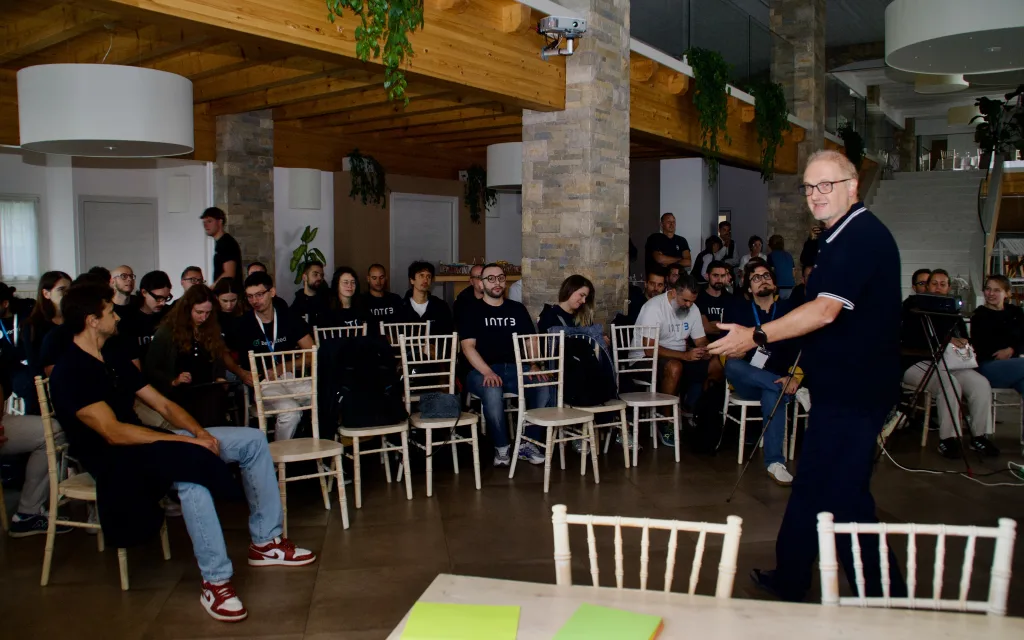
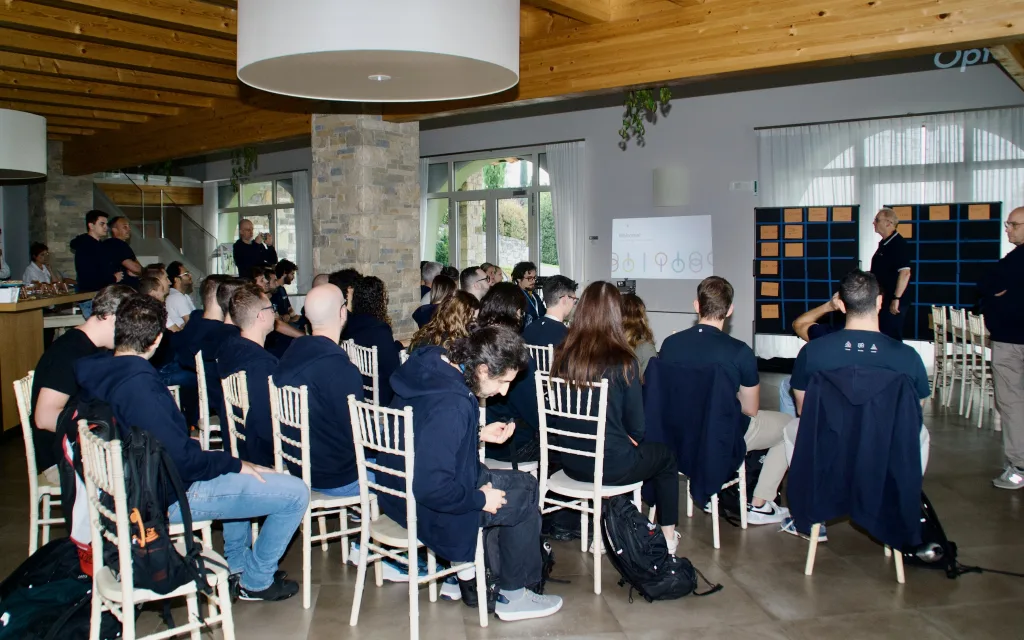
The day featured two sessions: the Unconference, our regular opportunity to share knowledge and encourage discussion, and, on this occasion, a training session on Artificial Intelligence, prompted by Regulation (EU) 2024/1689, also known as the AI ACT.
Read on to find out more.
Enjoy the read!
The morning: AI training sessions
Francesco Rigillo, CEO of Intré and Betrusted, opened the day with a presentation on the company’s performance, current situation and future developments.
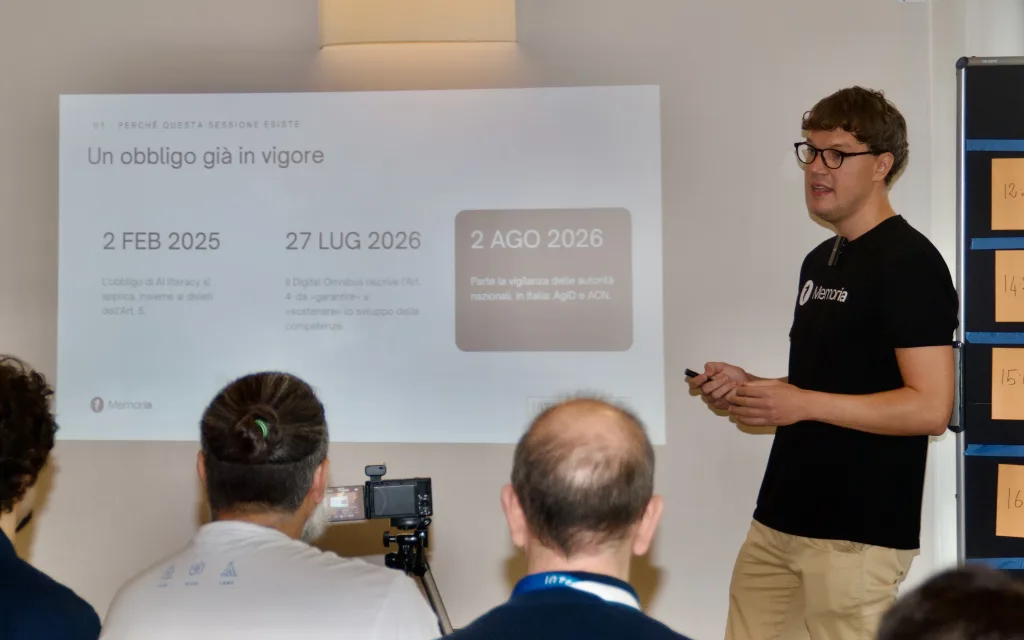
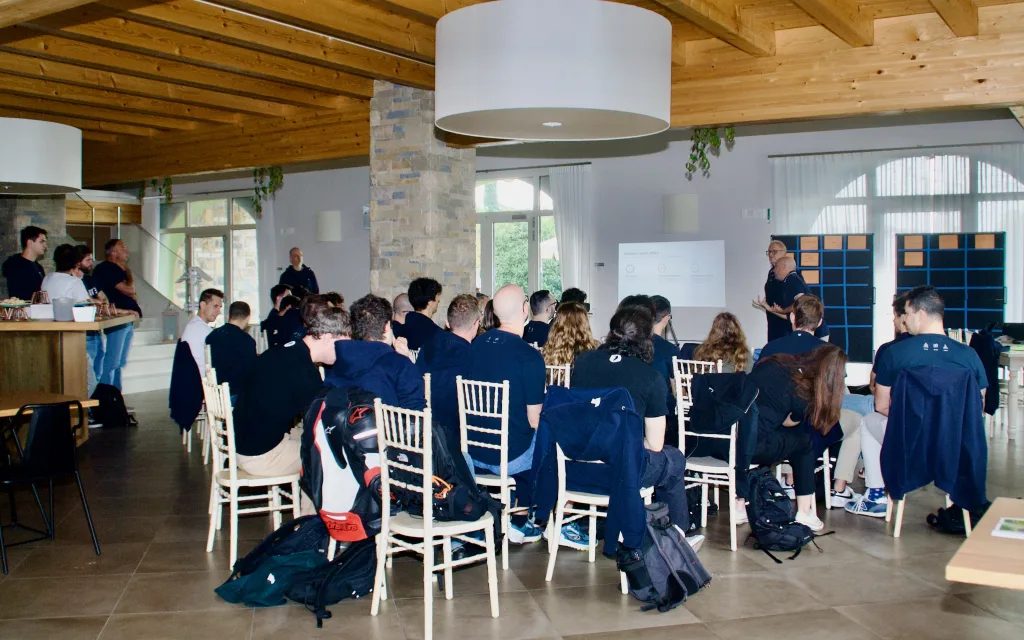
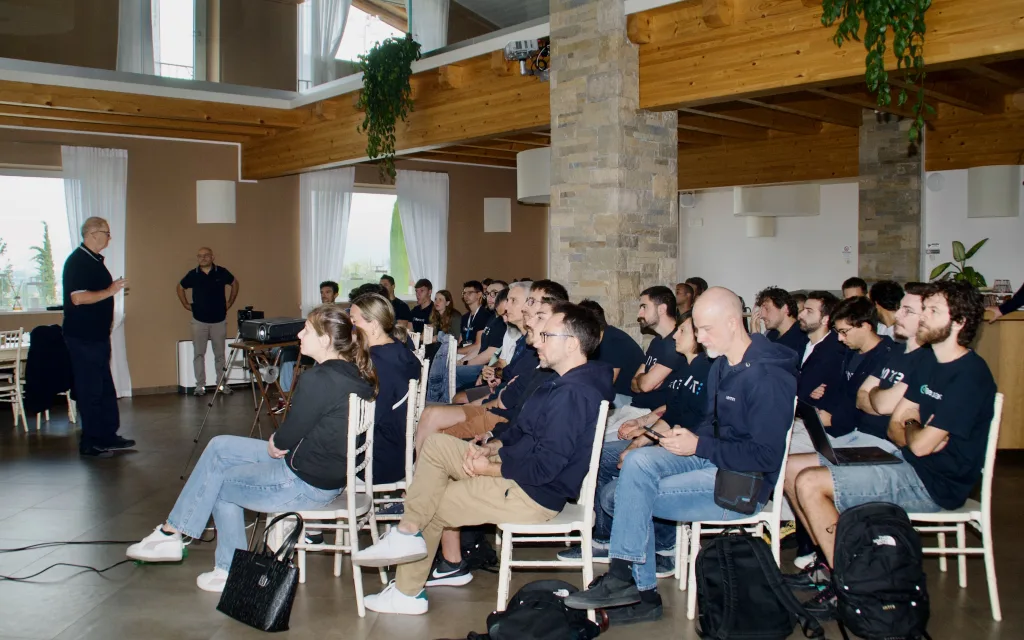
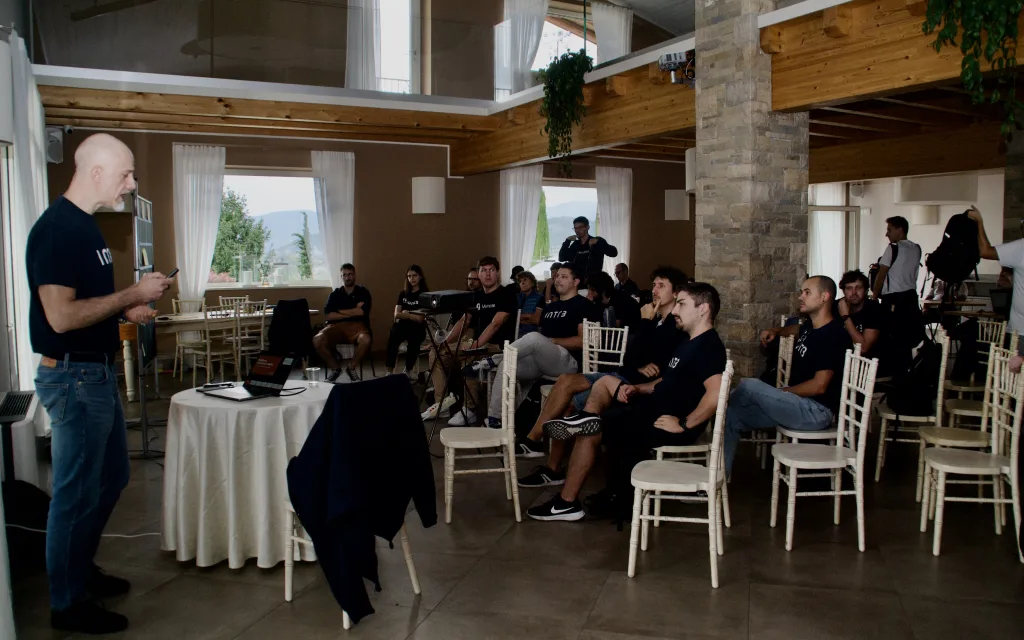
The morning continued with training on artificial intelligence (AI). Francesco Rigillo and Andrea Caglio, AI & Software Engineer at Intré and Memoria, led two training sessions to fulfil the obligations set out in the AI Act for companies that develop or use AI systems.
The aim of the AI training
These sessions gave all staff a practical understanding of the AI Act and its implications for their daily work. A central topic was the AI literacy obligation set out in Article 4 of the regulation.
Compliance also concerns those who use AI systems or contribute to developing them as part of their work. For this reason, the training was aimed at a range of professional roles, not just developers and technical staff.
A central topic of the training was the AI literacy obligation set out in Article 4 of the AI Act, which applies not only to those who develop AI systems, but also to those who use them or contribute to their development as part of their professional activities. For this reason, the sessions were aimed at a range of roles within the company, not exclusively developers and technical staff.
Understanding the AI Act’s approach
The sessions outlined the objectives of the European regulation, which aims to protect people’s rights, safety and interests without hindering innovation. Particular attention was paid to the risk-based approach adopted by the AI Act: the applicable obligations are determined by a system’s potential impact on people, rather than by the technology it uses.
Through practical examples and real cases, Francesco and Andrea explained the different levels of risk covered by the regulation, distinguishing between prohibited practices, high-risk systems, transparency obligations and minimal-risk applications.
Roles, responsibilities and governance
The sessions also explored the roles and responsibilities defined by the regulation, with particular reference to the distinction between provider and deployer. They highlighted how obligations can vary depending on the project’s architecture, contractual agreements and how the adopted solutions are used.
Alongside regulatory aspects, the sessions also addressed governance and the responsible use of artificial intelligence within the company. They highlighted the importance of human oversight, checking outputs, data protection and cybersecurity.
From theory to practice
The principles of the AI Act were translated into practical guidance for company projects: identifying initiatives that may pose risks at an early stage, involving the relevant specialists, documenting activities and promoting the responsible use of artificial intelligence throughout the lifecycle of the solutions developed and adopted.
An ongoing process
The closing message was clear: compliance with the AI Act is not a one-off activity, but an ongoing process that requires training, awareness and appropriate governance processes. Only by integrating these elements into daily activities can artificial intelligence be adopted safely, responsibly and in compliance with European regulations.
Unconference
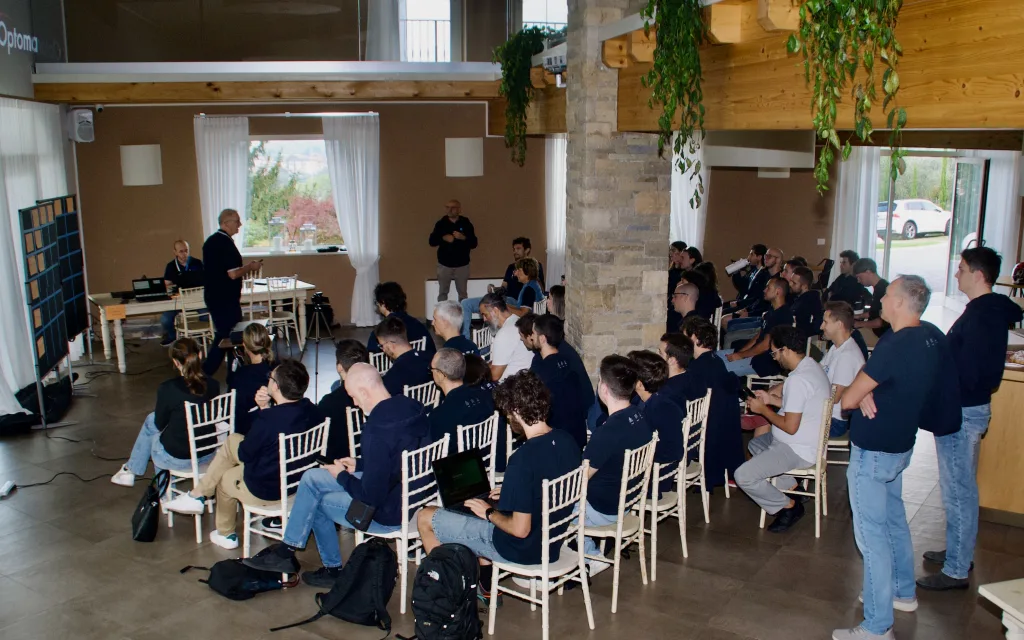
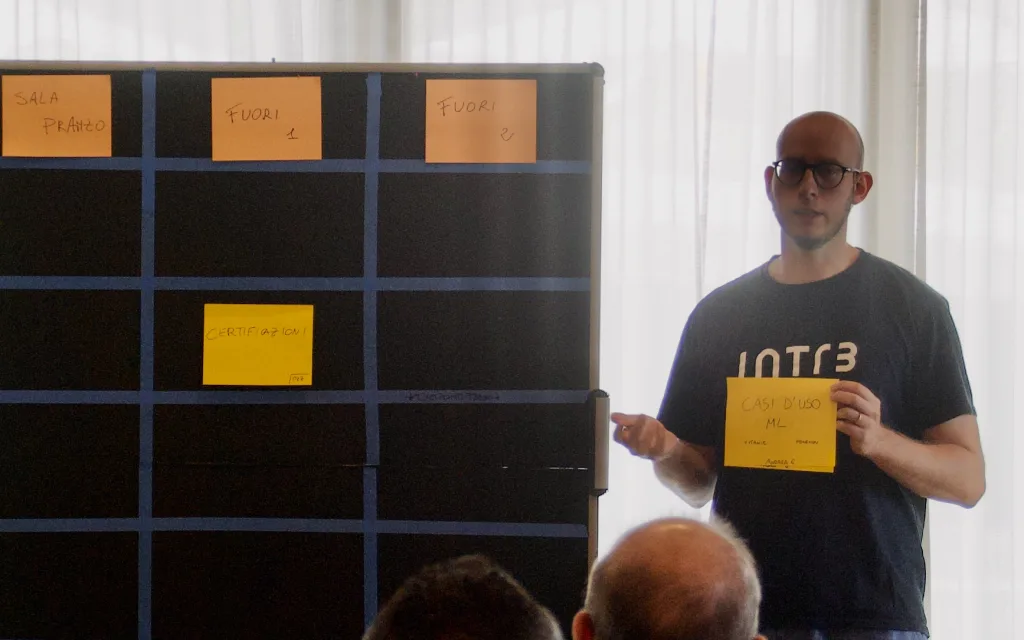
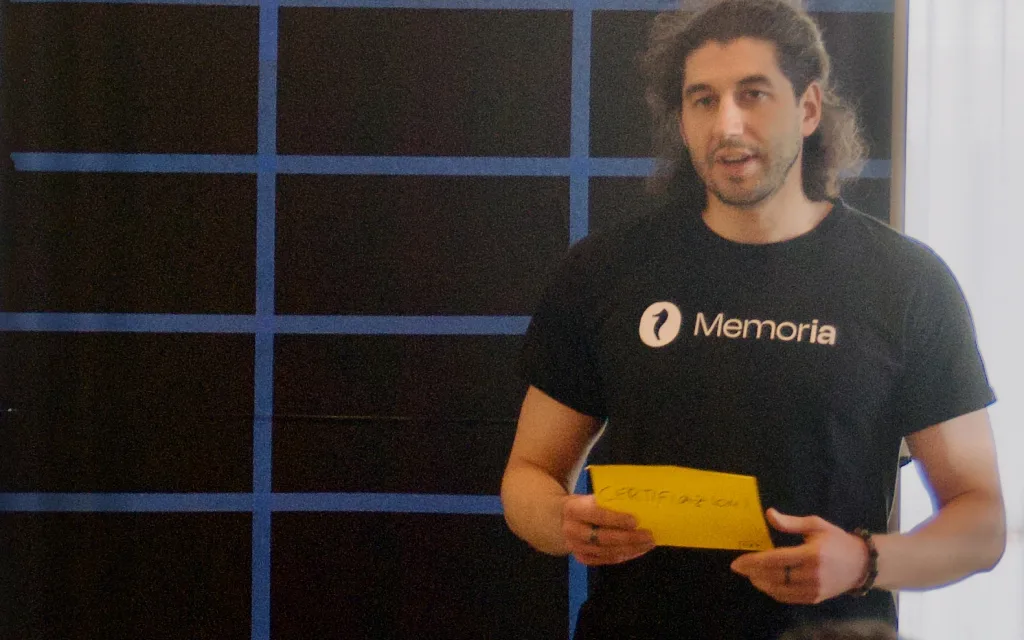
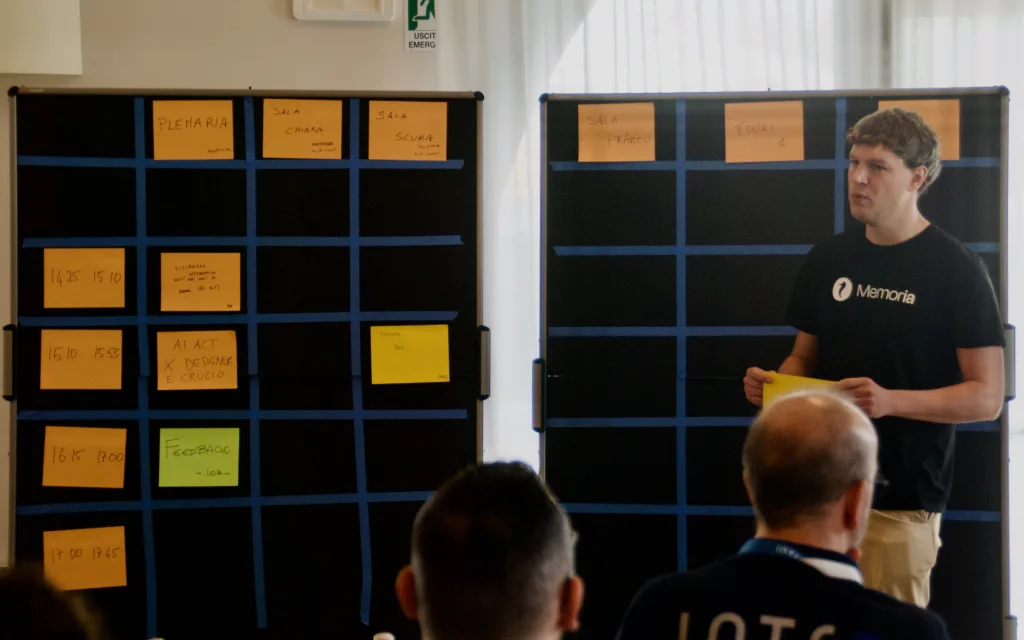
After the Gildonfiera, Fabio Ghislandi, Agile Coach and partner at Intré, kicked off the Unconference with the marketplace, where everyone can suggest a topic, briefly introduce it to the group and place their sticky note on the agenda, choosing the most suitable time slot.
What did we discuss during the Unconference?
During the Intré Camp on 25 September 2026, two sessions covered the AI training required by the AI Act.
Artificial intelligence also featured in many other presentations. A summer Guild shared its research into “offline AI”. Other topics included Machine Learning, the value of certifications in the age of AI and home automation.
Below is a brief recap of the sessions I attended.
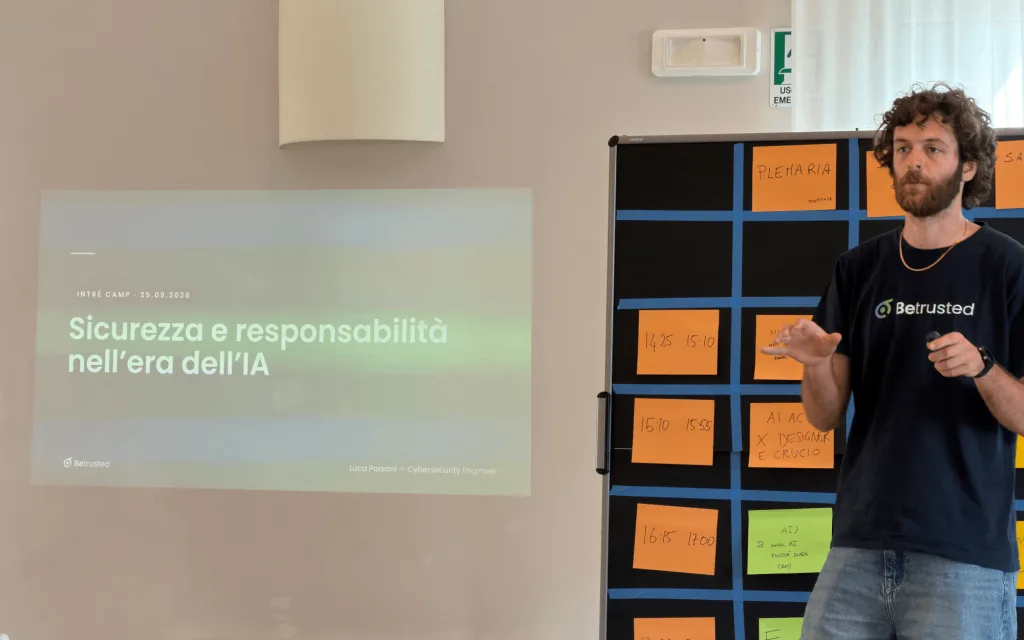
Security and responsibility in the age of AI
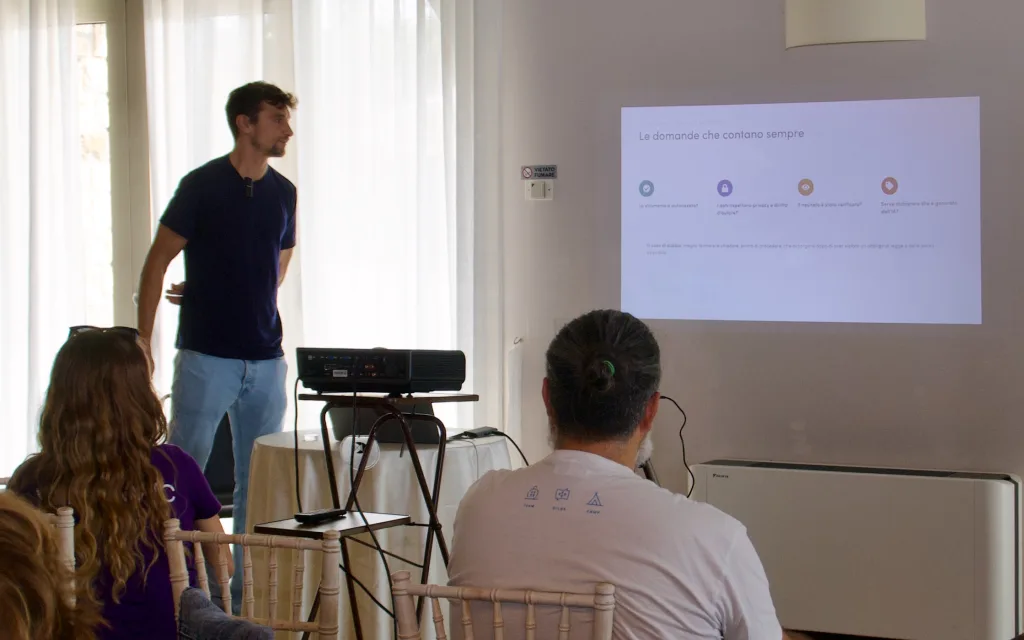
Luca Parsani, cybersecurity engineer at Betrusted, explained how to adopt artificial intelligence safely and responsibly. He organised his talk around four areas:
- Build: design responsible AI systems, ensuring data quality, transparency, traceability and human oversight throughout their lifecycle.
- Measure: assess risks such as prompt injection, bypassing safeguards, data poisoning, information leakage and excessive agent autonomy.
- Demonstrate: understand how the AI Act classifies AI uses according to risk, focusing on the requirements for high-risk systems and regulatory deadlines.
- Defend: examine the role of AI in cybersecurity. It can be a target to protect, a tool for attackers or an aid for defenders.
The central message? To create lasting value, AI requires clear governance rules, risk assessment, attention to compliance and appropriate security measures.
AI Act: guidelines for designers and content creators
Emanuele Mantovani, Head of Design at Thanks Design, presented the AI Act from the perspective of those working in design and content creation. His talk focused on the everyday use of artificial intelligence tools.
Emanuele explained the regulation’s approach: the greater a system’s potential impact on people’s rights and safety, the stricter the obligations. He also clarified the difference between a provider and a deployer. Depending on the project, an organisation may fulfil both roles.
He then outlined the four risk categories:
- Unacceptable risk: includes prohibited practices such as behavioural manipulation, social scoring and emotion recognition in the workplace.
- High risk: concerns, for example, systems used in recruitment, education, creditworthiness assessment and critical infrastructure. These systems must meet strict requirements.
- Limited risk: mainly involves transparency obligations towards users.
- Minimal risk: includes many commonly used tools, such as writing assistants, translators and productivity tools.
Emanuele focused on Article 50 and the transparency obligations for chatbots and certain content generated or modified using AI. Through practical examples, he showed when AI use must be disclosed and what role human involvement can play.
Finally, he offered some guidance for those working in design: use authorised tools, protect privacy and intellectual property, and check outputs. He also encouraged assessing the system’s risk and any transparency obligations from the earliest stages of a project.
The key message is this: the AI Act allows AI to be used, but requires it to be designed and used responsibly, transparently and with attention to risks.
MeshCentral
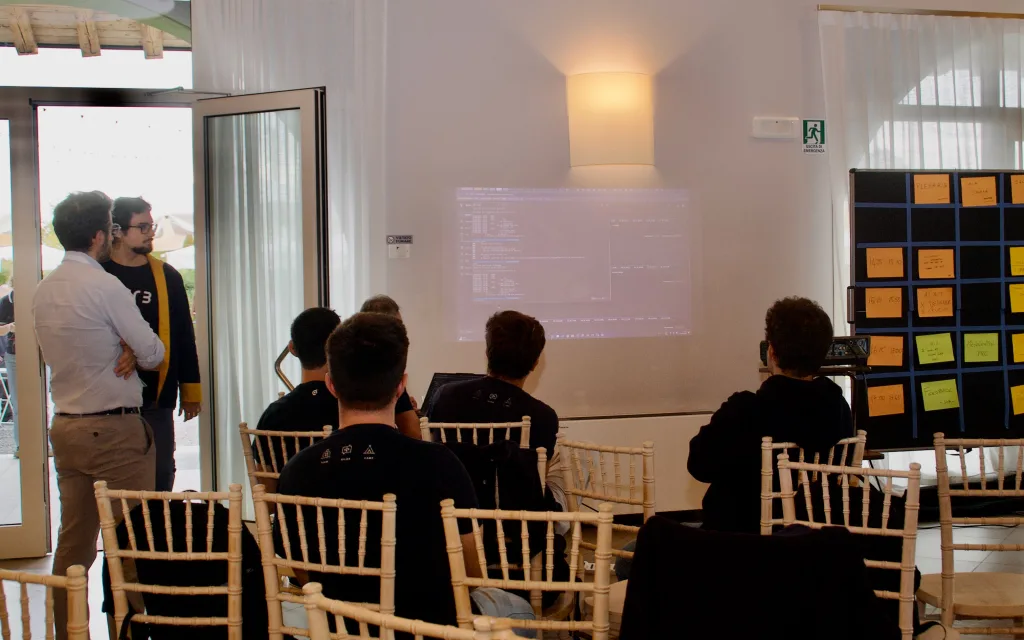
Daniele Percivaldi, IT System Administrator at Intré, led a session on MeshCentral, the subject of his summer research, as a potential solution for providing remote support for company computers. The aim was to assess an internally managed system that would be more flexible than Apache Guacamole and could help contain AnyDesk licensing costs, which have recently increased.
To test the tool, Daniele configured access to some company office computers, explaining how the IT department could provide remote support, potentially performing certain operations in the background without interrupting the user’s work, apart from an informational banner.
Daniele’s tests highlighted two areas for further investigation: configuration through JSON files, made less straightforward by the GitHub documentation, which is not always comprehensive, and permission management. The privileges granted to administrators can allow significant changes to computers, including uninstalling software, and therefore need to be defined carefully.
MeshCentral remains an option to assess alongside other alternatives, including RustDesk.
Feedback: let’s do it better
Marco Loregian, Agile Delivery Manager at Intré, highlighted how effective feedback can support individual growth, collaboration and continuous improvement within teams. Feedback is not about the past; its purpose is to positively influence future behaviour, turning observations into opportunities for development.
One of the central topics was why people often avoid giving feedback: concerns about relationships, fear of creating conflict or the belief that discussion is pointless. By contrast, well-managed feedback creates value for the recipient, the person giving it and the entire group, helping to build trust, motivation and a stronger organisational culture.
During his presentation, Marco suggested some fundamental rules to follow: feedback should be based on shared goals and be clear, frequent and multidirectional. It is important to choose the right moment, in a safe and respectful setting, avoiding public confrontations or situations of intense emotional tension.
He also introduced a practical three-step model: objectively describe the observed behaviour, explain its impact and discuss the desired behaviour for the future. This approach applies both to positive feedback and to feedback aimed at improvement.
In closing, Marco emphasised that giving and receiving feedback is a skill that requires practice. Active listening, empathy, two-way dialogue and follow-up are essential to make feedback a practical tool for personal and professional growth. The golden rule remains simple but fundamental: if you are angry, it is better to wait before giving feedback.
Conclusion
After the final Unconference session, we wrapped up the Intré Camp on 25 September with a group discussion, reflecting on both the Unconference and the AI training sessions.
See you at the next Intré Camp, which will most likely take place in February 2027.