

2025 - Quarter 3

Argilda – Pottery workshop
Argilda is a fusion of the words “clay” (argilla) and, of course, Gilda: a collective journey that uses the ancient art of clay — and ceramics — as a metaphor for exploration and shared learning.
Through the key milestones in the history of clay, the group directly experimented with modeling and decoration techniques. The experience stands out for its immersive sensory approach: activities conducted in the dark and the use of natural elements such as leaves and flowers stimulate new perceptive and expressive modes.
The workshop fosters the development of innovative creative and relational languages, strengthening cohesion and collaboration within the group.
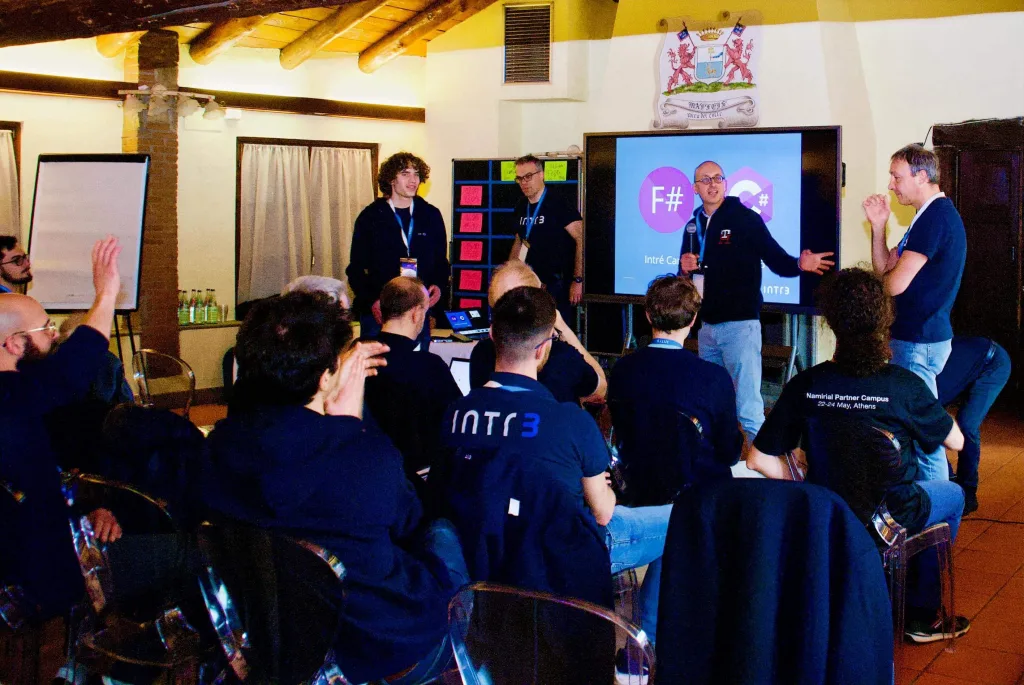
F#
The Guild embarked on a hands-on learning journey focused on F#, a functional programming language developed by Microsoft for the .NET platform, with a concrete focus on real-world applicability.
During the sessions, the team wrote more than 5,100 lines of F# code and over 2,500 lines of C#. The primary value, however, lies in the experimentation process: the group explored advanced concepts, assessing their impact and sustainability within ongoing client projects.
The outcome is a repository hosted on the company’s GitLab — not a production-ready application, but a structured knowledge archive and a solid foundation for future exploration.
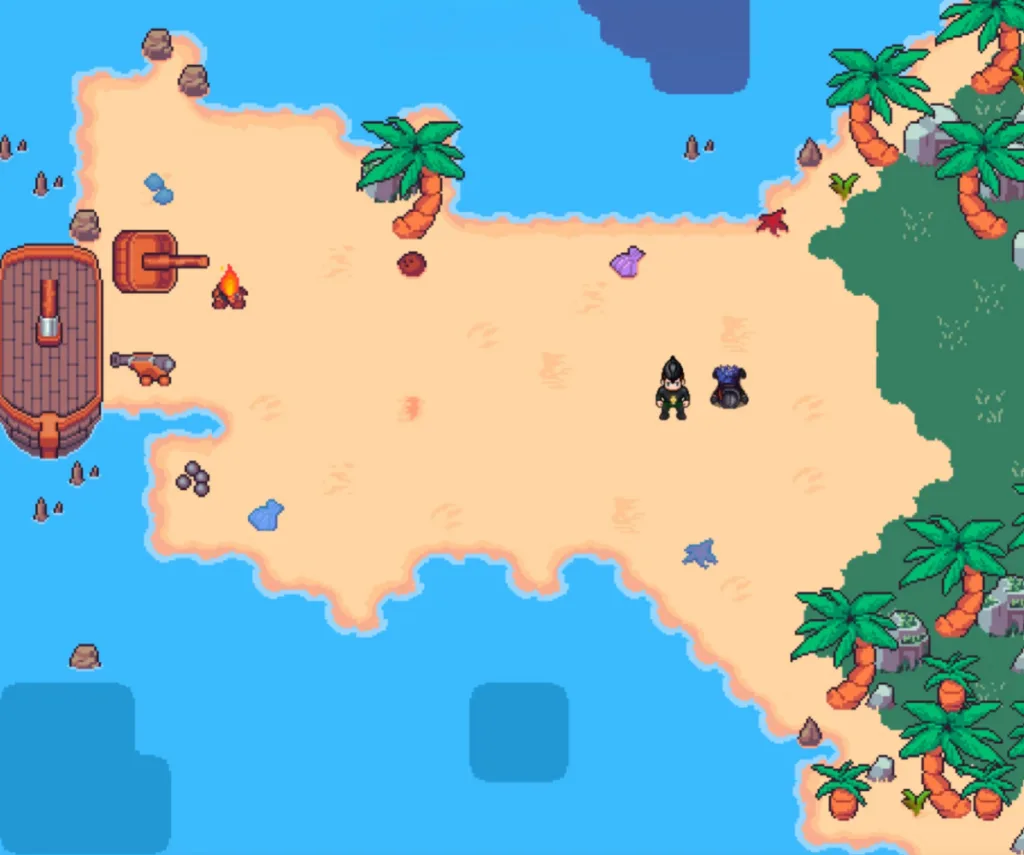
Intréndo
“Island Adventure” is an adventure video game developed by this Guild using the Phaser engine. The project was created to deliver a solitary and immersive experience, designed to stimulate logic and the player’s spirit of exploration within a compelling setting: a mysterious island full of secrets to uncover.
The team followed a comprehensive creative process covering all development phases: from initial brainstorming and game design definition, to building 2D environments with Tiled, composing an original soundtrack, and writing an engaging storyline with carefully crafted dialogue.
The result is a complete and polished video game featuring smooth movement mechanics, narrative puzzles, distinctive graphics, and inclusive attention to LGBTQ+ themes. Island Adventure invites players to embark on a personal journey of exploration, turning every corner of the island into an opportunity for discovery.
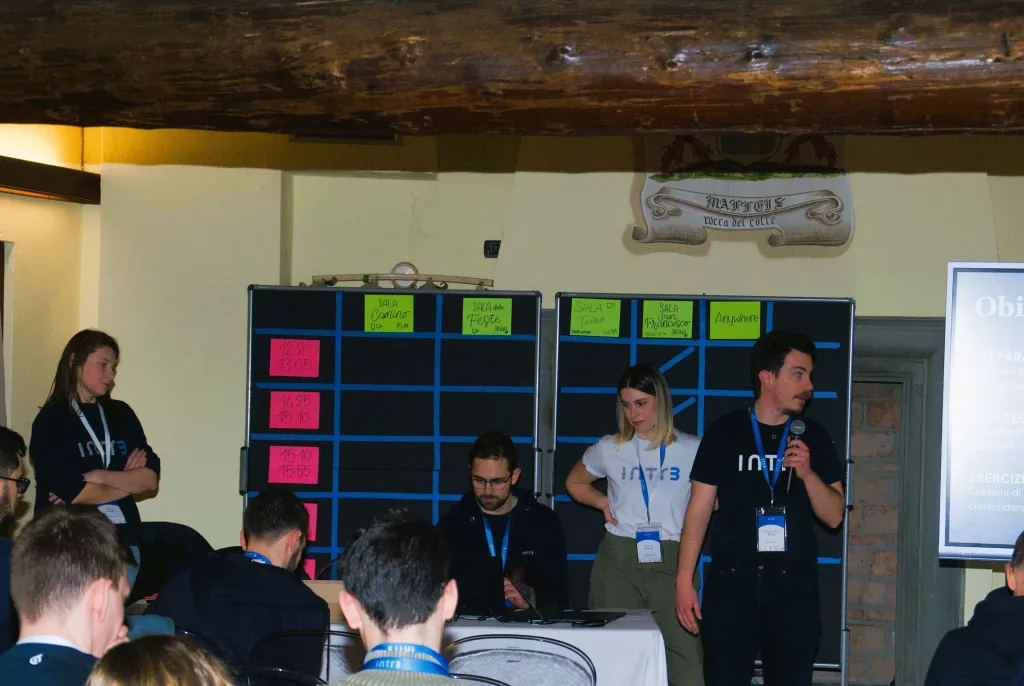
Junior Angular Developer
This Guild was created with the goal of preparing participants for the Junior Angular Developer certification through a structured and collaborative learning path.
The sessions alternated guided study of the official documentation, individual deep dives, and hands-on coding practice, aiming to strengthen the framework’s theoretical foundations and improve frontend development methodologies.
As tangible proof of the skills acquired, the group developed an Angular version of the game “Tic Tac Toe,” used as a practical project to apply learned concepts and reinforce design and implementation competencies.
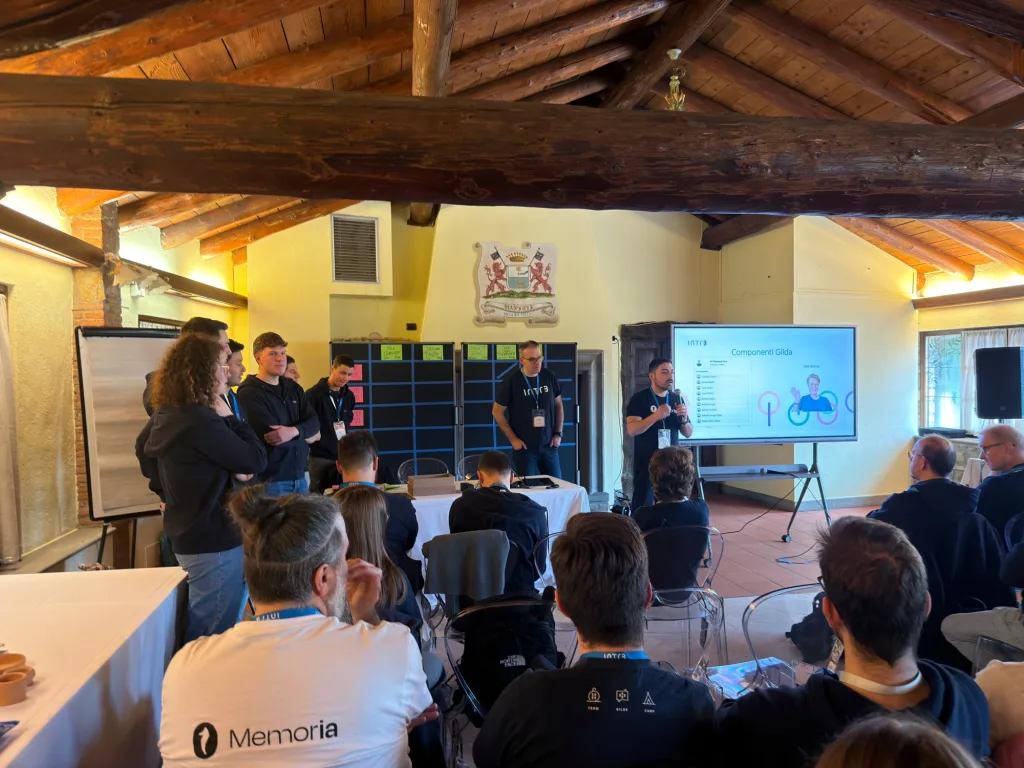
AI Century Fox
The Gilda developed an artificial intelligence project capable of transforming a simple text prompt into a cinematic product by automatically generating plot, poster, and trailer through a system of collaborative AI agents.
The project focused on exploring and integrating the latest agent-based AI technologies, with the goal of analyzing their operational logic, decision-making autonomy, and integration patterns within real software architectures.
Specifically, the team implemented advanced concepts such as Function Calling for structured tool invocation, an MCP server as a central coordination hub, and A2A protocols for agent-to-agent communication, integrating everything within a .NET framework.
The result is an operational architecture in which a frontend initiates the process by querying a Producer Agent, responsible for dynamically orchestrating the specialized agents required to generate the complete creative package. The project concretely demonstrates the potential of multi-agent systems in the automated production of complex content.
2025 - Quarter 1
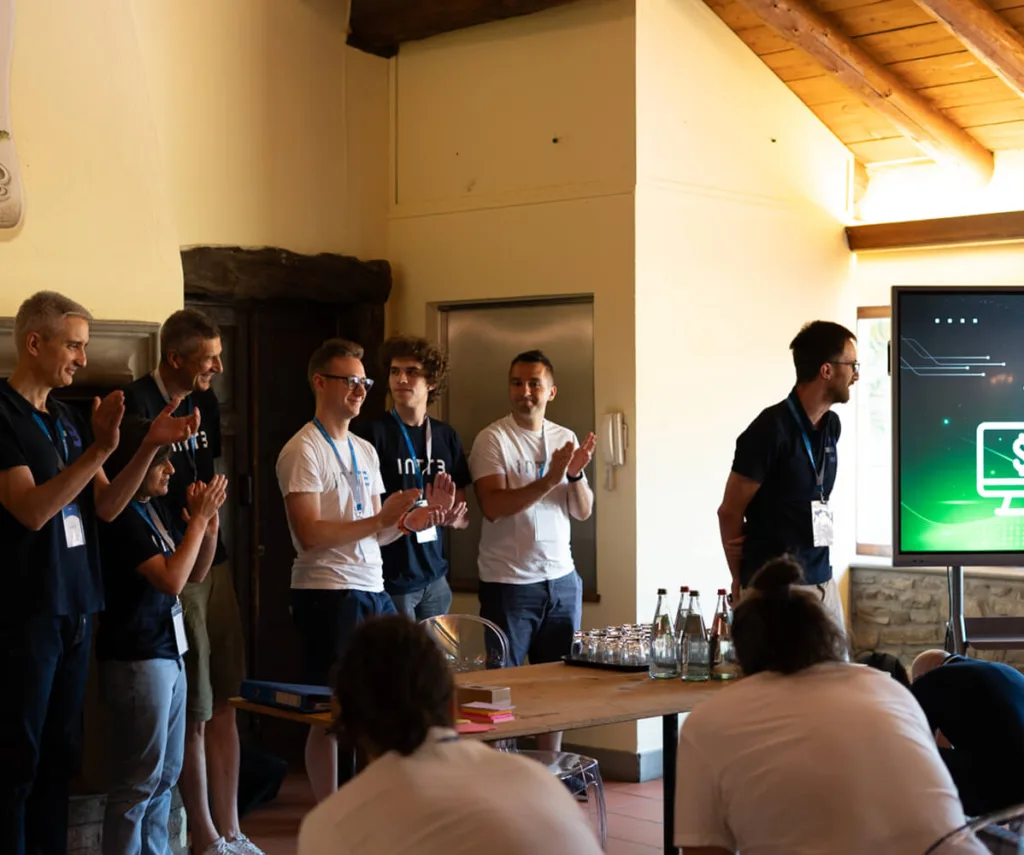
IoT Cloud
The project aims to practically and collaboratively explore the most widely used technologies and tools in the Internet of Things (IoT) ecosystem. The guild is committed to achieving four main objectives:
- Hands-on Experience with Cloud: Deepen the use of leading cloud services for the design, deployment, and management of scalable and secure IoT infrastructures.
- Development of a Generic IoT System: Build a platform capable of collecting, processing, and analyzing data in real time from various types of devices, using a modular and reusable architecture.
- Automation with Terraform: Apply Infrastructure as Code (IaC) techniques to automate the provisioning and configuration of cloud resources using Terraform.
- AI Model Integration: Experiment with artificial intelligence to analyze data streams, with the goal of training models that can generate real-time insights.
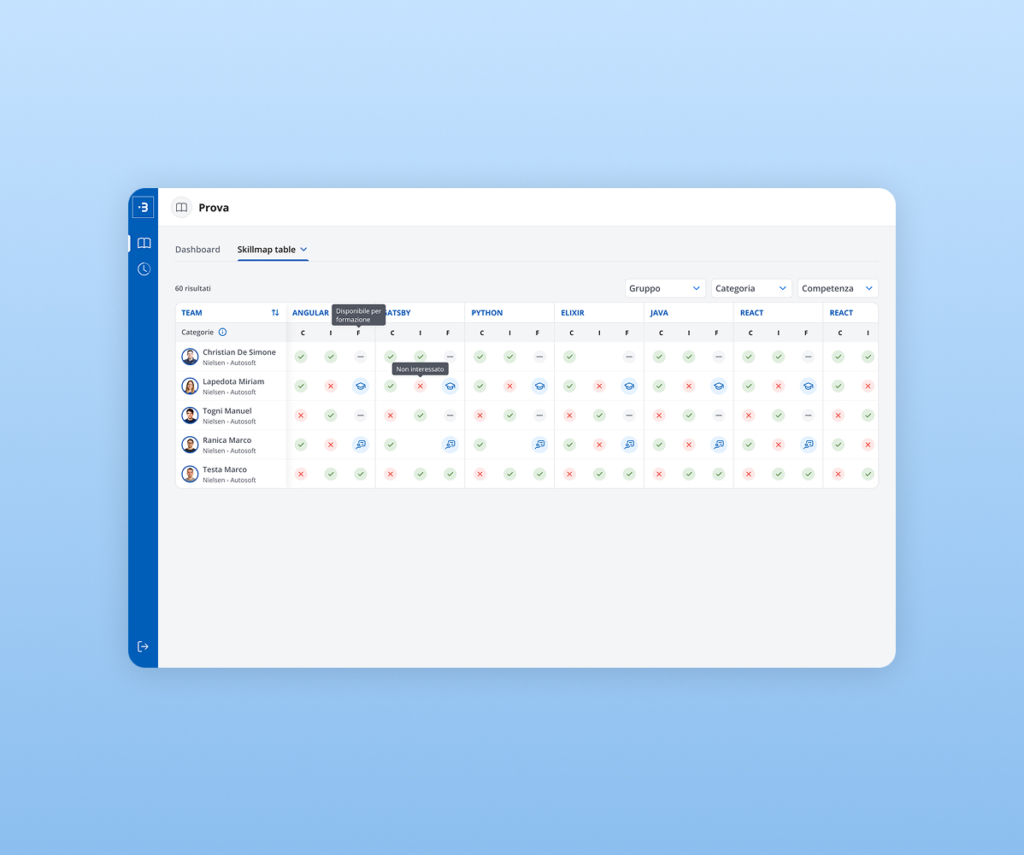
i3Skillz 2
The first iteration of this Guild developed a PoC to integrate microservices into the internal application used for time reporting: an operational backend under development and the analysis of the Skill Matrix.
In this second edition, the work continued to bring the system to a more advanced stage. The project was deployed in both development and production environments, the backend was further improved, and the frontend was implemented.
The next step aims to have fully functioning development and production environments, integrate testing (both backend and frontend), start using the app, and possibly evaluate its integration into the internal time reporting application.
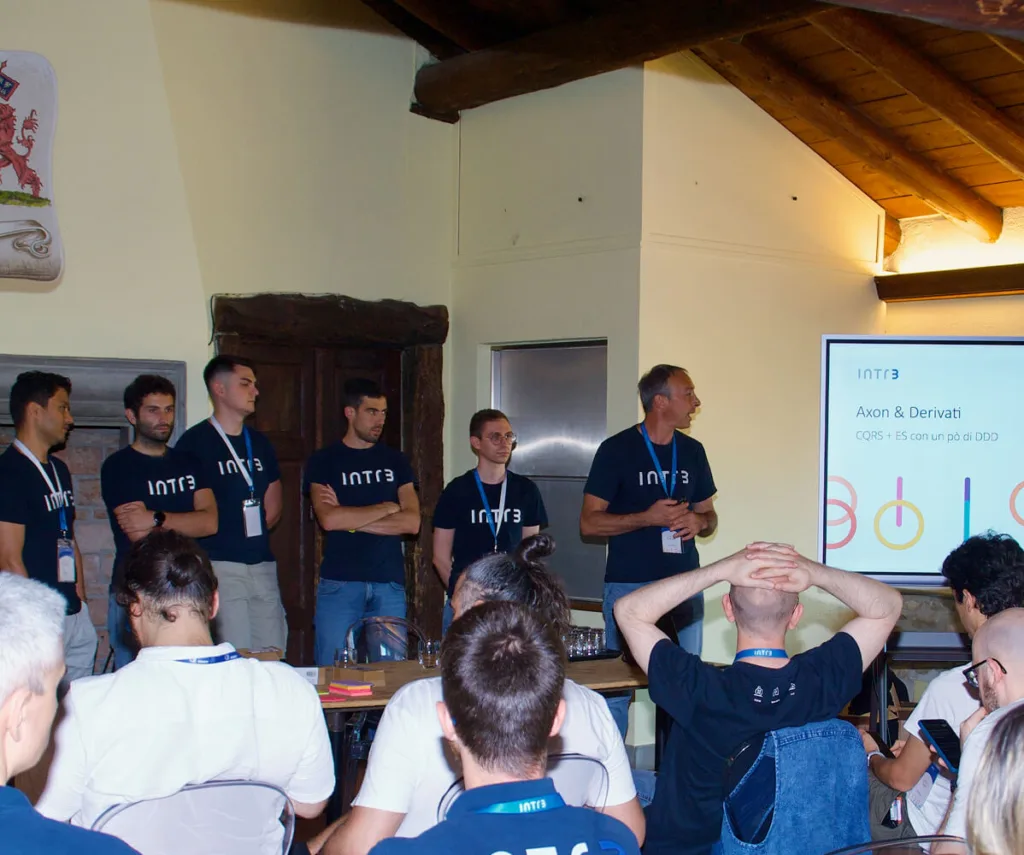
Axon and related frameworks
The Guild was established with the aim of studying and understanding the use of Axon Framework, one of the solutions offered by AxonIQ (our partner), a company that provides a platform for developing event-driven microservices applications using the concepts of CQRS and Event Sourcing.
To gain a deeper understanding of Axon Framework, the group followed the training programs provided by AxonIQ Academy, organized by role (Java Developer, Operations, etc.). In addition to learning how to use the tool, the Guild collaborated with the IoT Guild to integrate the framework into the project by developing the “i3Device” app, complete with frontend and backend.
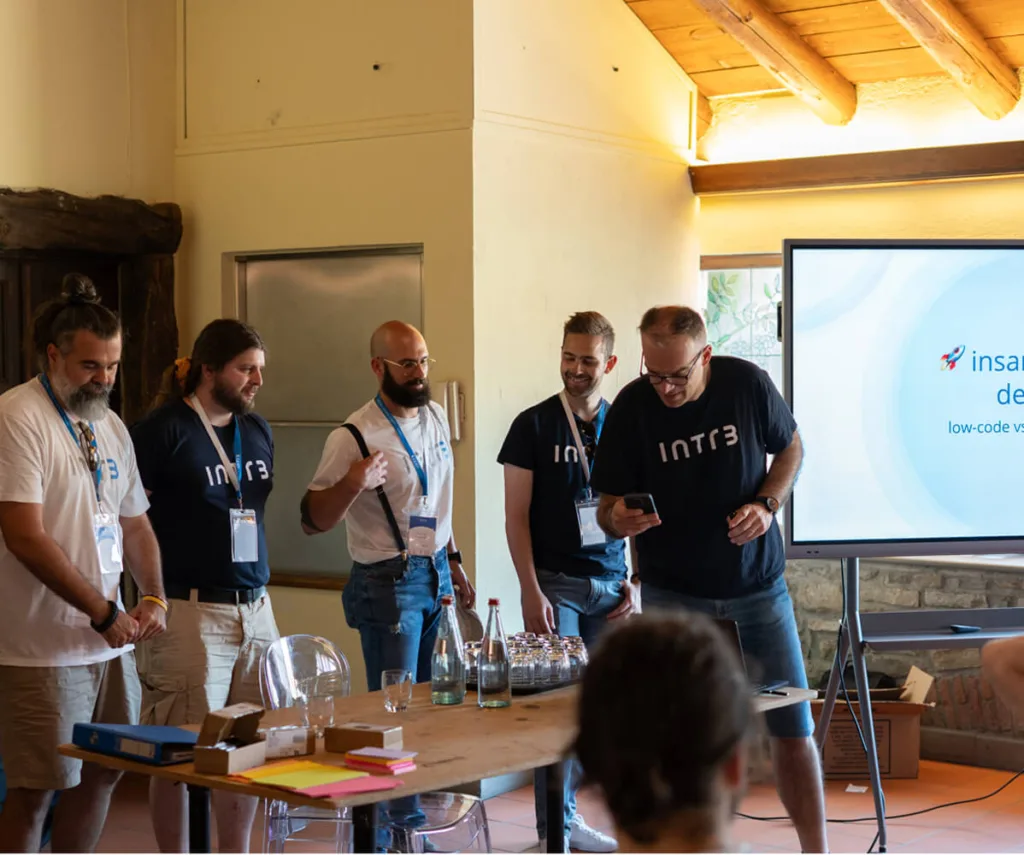
Low-Code vs No-Code vs AI
Do the low-code and/or no-code solutions currently available on the market offer an advantage in developing digital products? How does AI integrate into these workflows? Are AI Agents more effective?
The members of this Guild, after dedicating the first sessions to exploring the pros and cons of low-code and no-code approaches, identified two simple applications to develop using — of course — low-code and no-code solutions:
- Lucky Wheel (no-code): a web app that, once the names are entered, generates a wheel with each name written on a segment. When the wheel spins, it selects a winner at random.
- Pizza Finder (low-code): a web app that, given an image of a pizza menu (with ingredients) as input, returns all the pizzas containing the searched ingredient, if available.
Both apps were developed with the support of AI Agents such as GitLab Copilot.
DevOps Heroes
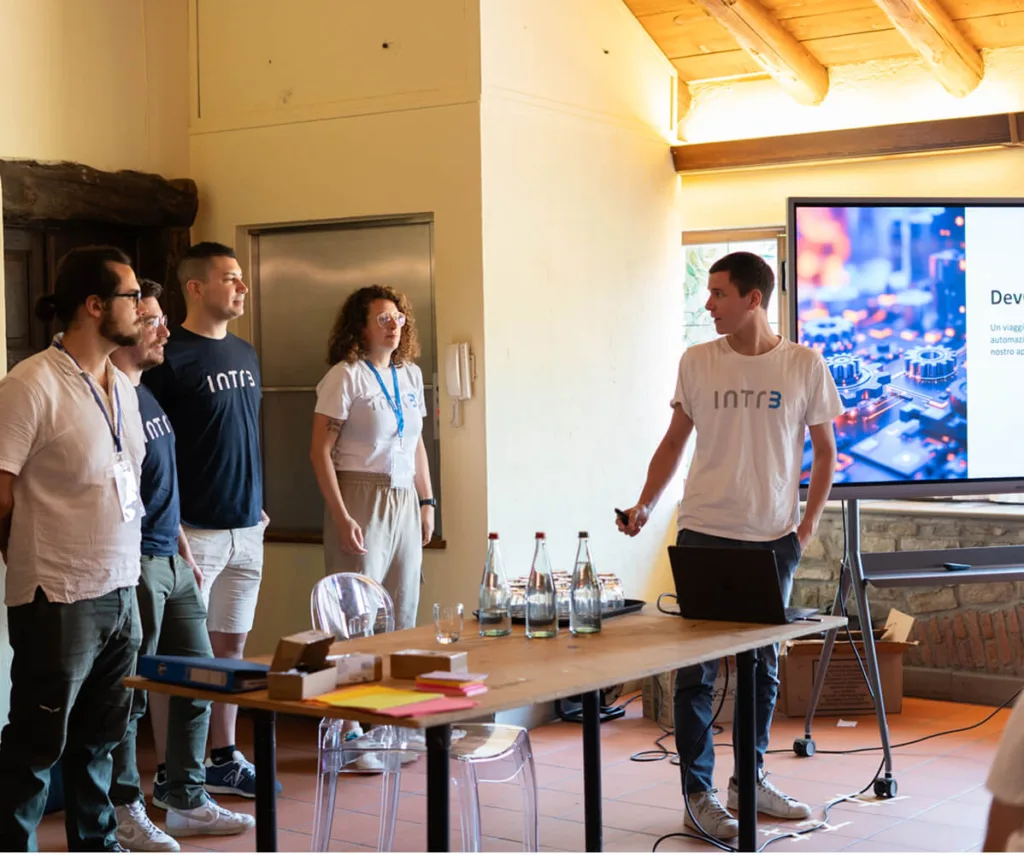
The Guild was created with the goal of deepening knowledge of the DevOps world, with a particular focus on:
- DevOps methodology and automation through CI/CD pipelines.
- CI pipelines with GitLab.
- Improving code quality and security.
As an output, ready-to-use CI templates were implemented (Java with Spring Boot, C# with .NET, TypeScript with Angular), along with a Docker Compose setup for running GitLab locally.
A technical article will be published soon on our company blog.